Choosing the right dough mixer can help a small bakery produce consistent batches without overwhelming limited counter space, staff, or budget. The machines in this roundup range from compact 5-liter models to larger commercial mixers with timers and fermentation functions.
Use the guide below to compare capacity, controls, bowl materials, and workflow features before selecting a machine that matches your daily production needs.
Best 10 Dough Kneading Machines for Small Bakeries Picks for 2026
Best Dual-Rotation Value
VEVOR 8.5Qt Commercial Food Mixer
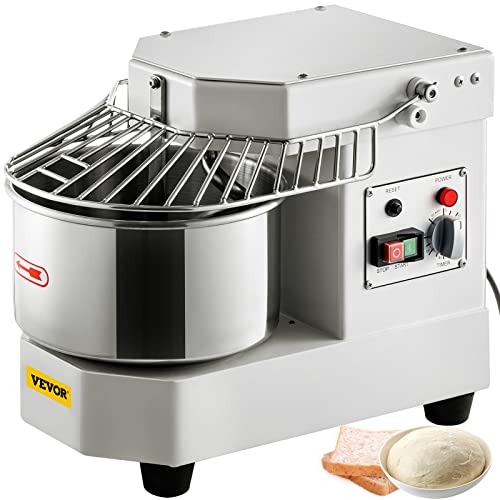
- Handles up to 3 kg of dough
- Dual-rotation mixing design
- 60-minute timer and safety shield
Best For: Small bakeries focused on bread and pizza dough
Best for Fermentation Control
Joydeem 9.5Qt Electric Dough Maker

- Includes seasonal fermentation modes
- Four mixing and fermentation programs
- 9.5-quart bowl with 304 stainless steel parts
Best For: Small bakeries making varied doughs with proofing needs
Best Multi-Purpose Commercial Mixer
VEVOR 15Qt Food Mixer with 3 Speeds

- Includes hook, beater, and wire whip
- Three speeds for varied recipes
- 30-minute timer and safety interlock
Best For: Bakeries needing dough, batter, filling, and whipping functions
Best Timed 5L Mixer

- 5-liter stainless-steel bowl
- 5–40-minute automatic timer
- Fermentation function included
Best For: Small, timed dough batches
Best for Everyday Use
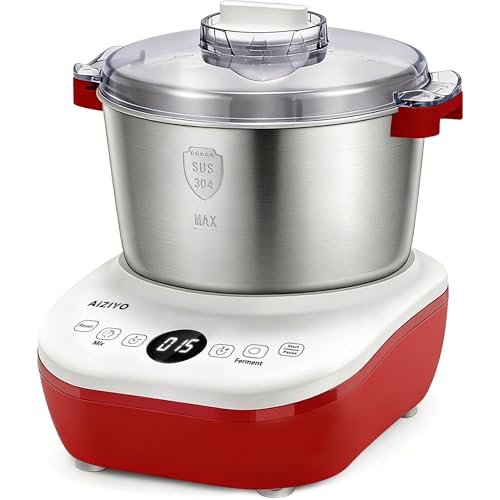
- 7.4-quart stainless-steel bowl
- 77–100°F fermentation range
- Add ingredients while mixing
Best For: Small bakeries needing integrated proofing
Best Commercial-Use 5L Value

- 5-liter stainless-steel basin
- 5–40-minute timed kneading
- Includes measuring accessories
Best For: Small shops and bakeries making recurring batches
Compact Fermentation Pick
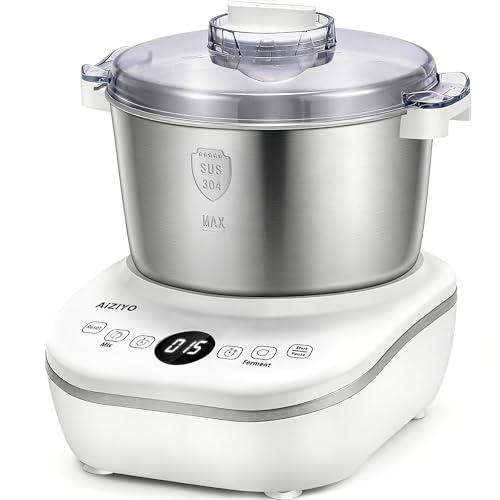
- 5.3-quart stainless steel bowl
- Mix, ferment, and combined modes
- Compact touch-controlled design
Best For: Small-batch bakery kitchens needing built-in fermentation
High-Volume Workhorse

- 13.8-quart stainless steel bowl
- Handles up to 14.88 pounds of dough
- 500-watt motor with 5–120 minute timer
Best For: Small commercial bakeries handling larger recurring batches
Quiet Knob-Control Choice

- 6.5-quart 304 stainless steel bowl
- Handles about 300–1,400 grams of dough
- Built-in 77–95°F fermentation
Best For: Small bakeries seeking mid-size capacity and tactile controls
Best Dual-Rotation Value – VEVOR 8.5Qt Commercial Food Mixer
For small bakeries seeking dough kneading machines, this VEVOR model offers an 8-liter stainless steel bowl, dual-rotation mixing, and a 450W motor. Its 60-minute timer and safety shield make it a practical option for repeatable dough preparation without constant supervision.
Best For: Small bakeries, pizzerias, restaurants, and food businesses that primarily need a dedicated dough mixer with a generous working bowl.
Pros:
- Handles up to 3 kg or 6.6 lb of dough at one time.
- Dual rotation combines a 21 RPM bowl with a 159 RPM hook for more even mixing.
- Food-contact components are made from food-grade stainless steel.
- Timer, safety shield, reset button, and nonslip feet support convenient operation.
Cons:
- It has only one speed, so it is less flexible for varied mixing tasks.
- At 81.6 lb, it is a substantial countertop or worktable appliance.
- The listed noise level is 70 dB.
This is a focused choice for businesses that value dough capacity and kneading consistency over multi-speed versatility. The dual-rotation design and timer are especially useful for routine bread and pizza production.
Best for Fermentation Control – Joydeem 9.5Qt Electric Dough Maker
Among dough kneading machines for small bakeries, the Joydeem HMJ-A901 stands out for combining mixing with adjustable fermentation. Its 9.5-quart bowl, separate Mix and Blend functions, and seasonal fermentation modes give small baking operations more control over dough and filling preparation.
Best For: Small bakeries producing bread, pizza, sourdough, roti, dumplings, or steamed buns that want built-in fermentation settings.
Pros:
- Supports flour weights from 900 g to 2,800 g, with a 2,500 g maximum for fermented dough.
- Offers Mix, Ferment, Mix + Ferment, and Blend modes.
- Adjustable mixing time runs from 5 to 30 minutes, while fermentation can be set from 5 to 120 minutes.
- 304 stainless steel bowl and blade are durable and easy to clean.
Cons:
- The 300W motor is less powerful on paper than the commercial VEVOR models in this roundup.
- The stated replacement coverage applies to normal home use, not necessarily commercial bakery use.
- Its plastic-and-stainless-steel construction may be less heavy-duty than an all-metal commercial mixer.
The HMJ-A901 is a versatile dough-processing appliance rather than a simple kneader. Its fermentation controls may appeal to small bakeries with varied recipes, although businesses should review the stated home-use replacement terms before relying on it for commercial production.
Best Multi-Purpose Commercial Mixer – VEVOR 15Qt Food Mixer with 3 Speeds
For bakeries that need more than dough kneading, this VEVOR 15-quart mixer adds a dough hook, flat beater, and wire whip to a 500W, three-speed system. It can knead dough, mix batters and fillings, and whip lighter mixtures, making it a flexible option for a varied production menu.
Best For: Small commercial bakeries, pizzerias, and kitchens that need one machine for dough, batters, fillings, cream, and egg whites.
Pros:
- Includes dough hook, flat beater, and wire whip for multiple preparations.
- Three speeds are designed for kneading, mixing, and whipping tasks.
- Detachable bowl and stirrers simplify cleaning.
- Includes a 30-minute timer and automatic shutoff when the safety shield is not secured.
Cons:
- The stated food capacity is up to 1.5 kg or 3.3 lb at one time, despite the 15-quart bowl.
- At 127.9 lb and 27 inches high, it requires substantial installation space.
- The machine should be stopped before changing speeds.
This model makes the most sense when versatility is as important as dough kneading. Its attachments and three speeds broaden its usefulness, but the large, heavy chassis and stated food capacity should be checked against your bakery’s workflow.
Best Compact Fermenting Kneader – Joydeem 7.4Qt Dough Maker
This Joydeem model is one of the more compact dough kneading machines for small bakeries, pairing a 7-liter stainless steel bucket with programmed kneading and fermentation. Its microcomputer controls, intermittent kneading motion, and face-up panel are designed to reduce hands-on work while conserving counter space.
Best For: Small bakeries or compact production spaces making bread, pizza, buns, and dumplings in moderate batches.
Pros:
- Can complete kneading in about 15 minutes or kneading and proofing in about 45 minutes according to the supplied notes.
- Intermittent kneading simulates a manual dough-making motion.
- Stainless steel bucket and blade are dishwasher safe, while the removable top cover aids cleaning.
- Suction cups and a weighted body help reduce movement and noise.
Cons:
- It has one speed and is not speed-adjustable.
- The 250W motor offers less power than the other listed commercial mixers.
- Its 6.24-liter stated capacity is smaller than the 9.5-quart Joydeem model.
The JD-HMJ7L is a space-conscious choice for smaller batches and scheduled dough routines. Its fermentation program and easy-clean components are useful, but the single speed and lower power make it better suited to moderate workloads than demanding commercial volume.
Best Timed 5L Mixer – 5L Electric Dough Maker
For small bakeries seeking dough kneading machines for small bakeries, this 5-liter electric dough maker offers a compact stainless-steel setup with programmable mixing and kneading. Its 200W motor, 140–170 rpm operating speed, and fermentation function suit routine bread and dough preparation.
Best For: Small bakeries and home-based operations that need timed batches, a visible lid, and a relatively compact 5-liter bowl.
Pros:
- 5–40-minute microcomputer timer stops automatically when the selected time ends.
- 304 stainless-steel bowl and blade support a durable, easy-to-monitor setup.
- Fermentation function and included measuring accessories add versatility.
Cons:
- The 200W motor and single listed speed may be better suited to moderate rather than high-volume production.
- Listed noise level is 75 dB.
This model is a practical choice when consistent timing and a small footprint matter more than heavy-duty capacity. Confirm the batch size fits your bakery’s daily output before buying.
Best for Everyday Use – AIZIYO DoughChief 7.4Qt Mixer
Among dough kneading machines for small bakeries, the AIZIYO DoughChief stands out for combining mixing and proofing in one appliance. Its 7.4-quart stainless-steel bowl, touch controls, and constant-temperature fermentation mode are useful for bread, pizza, and pasta dough workflows.
Best For: Small bakeries that want a larger-capacity mixer with integrated proofing and an opening for adding ingredients during operation.
Pros:
- Fermentation mode maintains a stated 77–100°F range for more consistent proofing.
- Mix–pause–mix programming and an S-shaped blade are designed to mimic hand kneading.
- 7.4-quart 304 stainless-steel bowl provides more capacity than the 5-liter models.
- Wide top opening allows flour or water adjustments while mixing.
Cons:
- It has one listed speed, limiting speed-adjustment flexibility.
- The 250W motor and 75 dB listed noise level may not suit every production environment.
The DoughChief is the strongest fit here for operations that value proofing control as much as kneading. Its larger bowl can reduce repeat batches, though available workspace should be checked because it is wider than the 5-liter alternatives.
Best Commercial-Use 5L Value – Electric Dough Maker
This 5-liter electric dough maker is aimed at home kitchens, breakfast shops, canteens, and bakeries looking for dough kneading machines for small bakeries. It combines a 200W copper motor with timed kneading, fermentation, and a stainless-steel basin for hands-free preparation.
Best For: Small food businesses that need a straightforward 5-liter kneader for recurring dough batches and hands-free operation.
Pros:
- Microcomputer timing can be set from 5 to 40 minutes with automatic shutoff.
- 140–170 rpm operation and a 200W DC copper motor support kneading and molding.
- Fermentation function is designed to improve dough elasticity and toughness.
- Includes a dumpling wrapper, measuring cup, egg separator, measuring spoon, and manual.
Cons:
- Only one speed is listed, so it offers limited control over mixing intensity.
- Its 5-liter capacity may require repeat batches for larger bakery orders.
- Listed noise level is 75 dB.
Choose this model if you want a simple, hands-free machine with commercial-use positioning and useful included accessories. The capacity and single-speed design make it better for smaller recurring batches than demanding high-volume production.
Compact Fermentation Pick – AIZIYO DoughChief 5.3QT
For small bakeries that need dough kneading machines for small bakeries without taking over the worktop, the AIZIYO DoughChief offers a compact 5.3-quart setup with mixing and fermentation modes. Its S-shaped blade and mix-pause-mix program are suited to everyday bread, pizza, pasta, and mochi preparation.
Best For: Small-batch bakeries and home-style commercial kitchens needing a compact mixer with built-in fermentation.
Pros:
- 5.3-quart food-grade stainless steel bowl for family-size batches.
- Mix, Ferment, and Mix & Ferment modes support different dough workflows.
- Removable lid allows ingredients to be added during mixing.
- Touch controls, time setting, and dishwasher-safe removable parts simplify operation and cleanup.
Cons:
- Its 200-watt motor and 5.3-quart capacity are better suited to smaller batches than high-volume bakery production.
- Listed noise level is 75 dB.
The DoughChief is a practical choice when space and batch size matter more than industrial throughput. The fermentation function adds convenience, while the stainless steel bowl and removable components make routine preparation easier.
High-Volume Workhorse – Commercial 13.8QT Dough Mixer
Among dough kneading machines for small bakeries, this 13.8-quart commercial mixer stands out for its larger batch capacity and 500-watt motor. It is designed for heavier production, handling up to 14.88 pounds of dough or 9.92 pounds of flour per batch, with a timer and fermentation function included.
Best For: Small bakeries, cafeterias, and restaurants that regularly prepare larger dough batches.
Pros:
- Large 13.8-quart 304 stainless steel bowl supports higher-volume mixing.
- 500-watt motor and spiral hook are designed for dough mixing, with additional planetary-style versatility.
- 5- to 120-minute timer and LED touch controls provide straightforward scheduling.
- Detachable bowl and hook make disassembly and cleaning more convenient.
Cons:
- The 19.7-inch width and 17.3-inch height require substantial counter space.
- Its larger commercial format may be excessive for very small batches.
This is the strongest fit for a bakery that needs more capacity than a household-style mixer can provide. The quieter-than-60-dB motor, visible lid, cooling system, and one-year warranty add useful operational support for regular commercial use.
Quiet Knob-Control Choice – 6.5QT Empire Red Dough Maker
For buyers comparing dough kneading machines for small bakeries, this 6.5-quart dough maker balances batch flexibility with a hands-on knob interface. It handles approximately 300 to 1,400 grams of dough, uses a stainless steel S-shaped blade, and includes constant-temperature fermentation for bread, pizza, dumplings, and pastries.
Best For: Small bakeries wanting a mid-capacity mixer with tactile controls, fermentation, and quieter operation.
Pros:
- 6.5-quart 304 stainless steel bowl accommodates up to about 1,400 grams of dough.
- Mix-pause-mix kneading and a removable lid support controlled dough development.
- Constant-temperature fermentation operates from 77–95°F when used with yeast or baking powder.
- Suction-cup stability, low-noise design, and mechanical knob controls suit busy prep areas.
Cons:
- The bowl is not recommended for dishwasher cleaning, although the dough blade can be washed that way.
- Its stated batch range is smaller than the 13.8-quart commercial mixer.
This model is a sensible middle ground for a small bakery that wants more capacity than a compact 5.3-quart machine but does not need an industrial-size bowl. Its tactile controls and fermentation temperature range make it convenient for repeatable dough preparation.
How We Picked the Best Dough Kneading Machines for Small Bakeries
We focused on machines suited to small-batch commercial or high-volume home bakery work. Key considerations included bowl capacity, motor power, dough-focused controls, timer functionality, fermentation options, stainless steel construction, countertop footprint, and ease of operation. We also included a range of sizes so bakeries can choose according to batch volume rather than simply buying the largest model.
Product specifications can vary by seller and production run, so verify the listed wattage, usable dough capacity, electrical requirements, included accessories, and warranty before ordering.
Quick Comparison
| Best For | What to Prioritize | Models to Consider |
|---|---|---|
| Compact production | 5L to 5.3QT bowl, small footprint, simple controls | 5L electric dough makers and the AIZIYO 5.3QT model |
| Everyday bakery batches | 6.5QT to 9.5QT capacity, timer, fermentation function | Joydeem, AIZIYO, and 6.5QT dough makers |
| Larger batch output | 13.8QT to 15QT capacity, stronger commercial design | VEVOR 15Qt and 13.8QT commercial models |
| Versatile preparation | Multiple modes for dough, kneading, blending, or filling | Joydeem dual-function models |
Key Buying Factors for Dough Kneading Machines for Small Bakeries
Capacity and Batch Size
Choose capacity based on your normal batch, not your maximum occasional batch. A smaller bowl may be more efficient for frequent test batches and reduce wasted ingredients, while 9.5QT to 15QT machines make more sense for bread, pizza, or pastry production throughout the day. Check usable dough capacity because flour and water volume can be lower than the advertised bowl size.
Motor Power and Dough Type
Wattage is only one indicator of performance. Dense dough places more strain on a machine than light batters, so consider the intended dough types, mixing speed, duty cycle, and manufacturer guidance. A timer can improve repeatability, but it does not replace monitoring the dough during early use.
Controls, Timing, and Fermentation
Microcomputer controls, face-up touch panels, and programmable timers can streamline repeated recipes. Built-in fermentation functions may be useful when space or equipment is limited, but confirm the temperature range and bowl capacity before relying on them for production.
Construction and Cleaning
304 stainless steel bowls are durable and generally easy to clean. Look for removable lids, accessible controls, stable feet, and attachments that can be washed without complicated disassembly. A machine that is difficult to clean may slow production despite having strong specifications.
Space, Noise, and Electrical Needs
Measure the available counter and storage space, including room to lift the bowl or open a lid. Confirm voltage and plug requirements, particularly for commercial models. If the mixer will run near customers or staff stations, noise and vibration are also practical considerations.
Who Should Buy Which Dough Kneading Machines for Small Bakeries?
Choose a 5L to 5.3QT machine if you run a compact bakery, sell limited daily batches, or need a dedicated unit for testing recipes. A 6.5QT to 9.5QT model is a balanced choice for many small bakeries producing bread, pizza dough, or enriched dough on a regular schedule. Select a 13.8QT or 15QT commercial mixer when consistent larger batches are central to your workflow and you have adequate counter space and electrical capacity.
For bakeries that value simplified scheduling, prioritize timer and fermentation functions. If flexibility matters more, a dual-function model may handle filling or blending as well as dough. Before buying, compare the machine’s usable capacity, expected workload, cleaning process, warranty, and replacement-part availability—not just the headline bowl size or wattage.