The best camping stoves for backpacking make it easier to boil water, prepare meals, and stay comfortable without adding unnecessary weight to your pack. The right choice depends on your fuel system, cooking style, group size, and the conditions you expect to encounter.
This roundup compares 10 compact backpacking stoves, including ultralight canister models, wind-resistant burners, dual-fuel designs, and wood-burning options. Use the guide below to narrow the list by performance, portability, convenience, and value.
Best 10 Camping Stoves for Backpacking Picks for 2026
Ultralight Canister Pick

- 2.6-ounce compact folding design
- Boils 1 liter in 3.5 minutes
- Adjustable flame and included case
Best For: Minimalist backpackers using threaded isobutane-propane canisters
Dual-Fuel Camp Kitchen
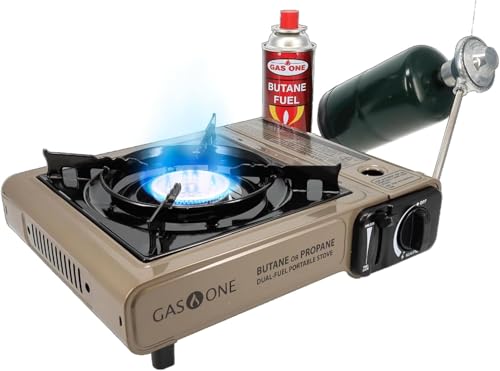
- Runs on butane or propane
- Automatic piezo ignition
- Built-in pressure and gas-flow safety features
Best For: Car camping and emergency kits needing fuel flexibility
Fuel-Canister-Free Option

- 6.8-ounce titanium construction
- Packs flat to 0.2 inches
- Burns available natural materials
Best For: Backpackers and survival kits with access to dry natural fuel
Compact Ignition Pick

- 85-gram lightweight design
- Built-in piezo ignition
- Micro windshield and fuel-efficient construction
Best For: Backpackers wanting compact isobutane cooking with push-button ignition
Compact Gas Pick
Small Backpacking Stove Burner
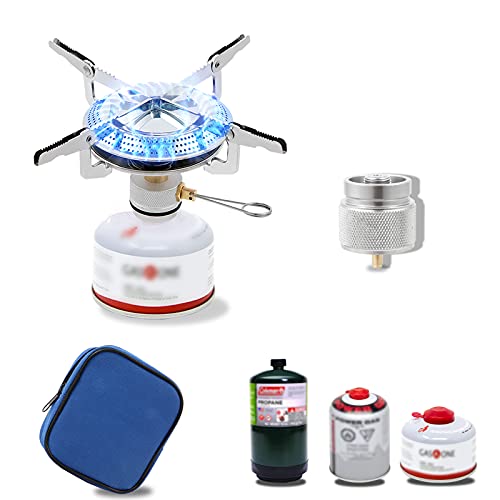
- Foldable, compact design with zipper case
- Adapter supports butane and 1-pound propane bottles
- Wide supports and adjustable flame for stable cooking
Best For: Backpackers needing a compact, versatile gas burner
High-Output Choice
WADEO 7200W Windproof Camp Stove

- 7200W output for fast heating
- Windproof design with 5.91-inch cooking area
- Works with isobutane, butane, and 1-pound propane
Best For: Campers wanting fast boils and broad fuel compatibility
Solid-Fuel Budget Pick

- Folds flat for compact storage
- Uses fuel tablets, canned heat, or solidified alcohol
- Stable 6.5-by-6.5-inch coated steel platform
Best For: Hikers wanting a simple solid-fuel emergency stove
Ultralight Simmer Specialist
AOTU Portable Backpacking Stove

- Weighs just 3.84 ounces
- Adjustable 3000W flame control
- Compact case and EN 417 compatibility
Best For: Solo or small-group backpacking meals
High-Output Group Cooker

- 6800W output for rapid heating
- Supports butane, isobutane, and 1-lb propane
- 10 kg stated capacity with stable pot supports
Best For: Group cooking and larger outdoor cookware
Balanced Windproof Pick

- Windshield supports efficient burning
- Foldable with included carry case
- 3500W output and piezo ignition
Best For: Versatile hiking, overnight, and picnic cooking
Ultralight Canister Pick – MSR PocketRocket 2
MSR PocketRocket 2 Ultralight Camping and Backpacking Stove | Backcountry super hero.
Check Price On AmazonFor hikers comparing camping stoves for backpacking, the MSR PocketRocket 2 is a compact canister stove focused on low pack weight and quick boiling. It weighs just 2.6 ounces, boils a liter in 3.5 minutes, and offers adjustable heat for more than simple water heating.
Best For: Minimalist backpackers, trekkers, and travelers who use threaded isobutane-propane canisters.
Pros:
- Very light at 2.6 ounces and folds to a compact 2 x 2 x 3 inches.
- Boils one liter of water in approximately 3.5 minutes.
- Adjustable flame supports simmering and rolling boils.
- Includes a protective hard-shell case and requires no priming or preheating.
Cons:
- Fuel canister is not included.
- Designed for threaded isobutane-propane canisters rather than wood or liquid fuel.
The PocketRocket 2 is a strong choice when minimizing stove weight and packed size matters most. Its broad pot supports and controllable flame add useful versatility for lightweight backcountry meals.
Dual-Fuel Camp Kitchen – Gas One GS-3400P
The Gas One GS-3400P gives camping stoves for backpacking shoppers a flexible fuel option, working with either butane or propane. Its automatic piezo ignition and adjustable heat dial make it straightforward to operate, though its 3.1-pound weight is better suited to vehicle-supported trips than ultralight backpacking.
Best For: Car camping, emergency preparedness, and campers who value dual-fuel flexibility over low weight.
Pros:
- Compatible with both butane cartridges and propane cylinders.
- Automatic piezo ignition eliminates the need for matches or a lighter.
- Adjustable heat dial supports basic cooking control.
- Includes safety features for pressure irregularities and butane gas flow.
Cons:
- At 3.1 pounds, it is substantially heavier than ultralight backpacking stoves.
- Neither butane nor propane fuel is included.
- Its larger 13.5 x 11 x 4.45-inch dimensions take more pack or storage space.
This stove makes the most sense when fuel availability and straightforward ignition are priorities. For long-distance backpacking, its size and weight may be limiting, but it can be practical for campgrounds, preparedness kits, and short trips.
Fuel-Canister-Free Option – Kuvik Titanium Wood Stove
Among camping stoves for backpacking, the Kuvik Titanium Wood Stove stands out for burning natural materials instead of carried fuel canisters. It packs flat to 0.2 inches, weighs 6.8 ounces, and sets up as a freestanding stove for twigs, sticks, grass, roots, or bark.
Best For: Ultralight hikers, survival kits, and campers traveling where suitable dry natural fuel is available.
Pros:
- Ultralight titanium construction weighs approximately 6.8 ounces.
- Packs nearly flat for efficient storage in a backpack.
- Uses organic materials found around camp instead of fuel canisters.
- Includes a carrying case to help contain soot and protect other gear.
Cons:
- Performance depends on finding suitable dry natural fuel.
- Burning wood can produce soot and requires tending through the fire-stoking opening.
- It does not offer the stated quick-boil specification of the canister stoves in this roundup.
The Kuvik is appealing for pack-flat storage and reduced dependence on carried fuel. It is best for users comfortable managing a small wood fire and checking that natural fuel is available at camp.
Compact Ignition Pick – Fire-Maple Greenpeak 1
The Fire-Maple Greenpeak 1 is a practical entry in camping stoves for backpacking, combining an 85-gram weight with a built-in piezo igniter and micro windshield. Its compact folding design fits small loads, while the fuel-efficient layout is intended to help extend isobutane fuel use.
Best For: Backpackers, hikers, and anglers who want a compact gas stove with push-button ignition.
Pros:
- Weighs approximately 3 ounces and folds to 2.1 x 2.8 inches.
- Built-in piezo igniter avoids needing a separate ignition tool for normal use.
- Micro windshield and fuel-efficient design support outdoor cooking.
- Uses an EN417 isobutane valve and is made with durable metal components.
Cons:
- Fuel is not listed as included in the supplied specifications.
- Not compatible with the Z1 adapter.
- Its compact size may be better suited to smaller backpacking cookware than large pots.
Greenpeak 1 is a well-balanced option for hikers who want low weight without giving up integrated ignition. Check your fuel and cookware compatibility before heading out, especially if you plan to use an adapter or a larger pot.
Compact Gas Pick – Small Backpacking Stove Burner
For shoppers comparing camping stoves for backpacking, this compact gas burner offers a straightforward setup, foldable pot supports, and a supplied adapter for added fuel flexibility. It weighs 0.27 kg and packs into its included zipper case.
Best For: Backpackers and emergency-kit users who want a compact gas stove for coffee, boiling water, or smaller meals.
Pros:
- Folds small and stores in a zipper case for easier transport.
- Wide pot supports provide a stable cooking platform.
- Includes an adapter for butane cylinders and 1-pound propane bottles.
- Flame control allows adjustment from low to high heat.
Cons:
- Its 0.27 kg weight is higher than some minimalist stove designs.
- Fuel adapter compatibility requires carrying the appropriate adapter and fuel source.
This is a practical choice when stability and fuel versatility matter more than having the absolute lightest stove. Its wider support base and adjustable flame suit simple trail cooking without adding much bulk.
High-Output Choice – WADEO 7200W Windproof Camp Stove
Among camping stoves for backpacking, the WADEO stands out for its 7200W output, windproof design, and broad 5.91-inch cooking area. It weighs 20.39 ounces and connects with isobutane, butane, or 1-pound propane canisters using the appropriate adapter.
Best For: Backpackers and campers who prioritize faster boiling, larger cookware support, and multiple fuel options.
Pros:
- High-power burner is rated at 7200W and is designed to boil 1 liter in under 2 minutes.
- Windproof design helps improve burning efficiency in breezy conditions.
- Supports isobutane, butane, and 1-pound propane canisters.
- Piezo ignition, long flame-control handle, and non-slip support pads add convenience.
Cons:
- At 20.39 ounces, it is not the lightest option for weight-focused trips.
- Any added wind shield must leave gaps for airflow to avoid excessive heat buildup.
The WADEO is a capable all-purpose option for trail cooking when quick heat and cookware flexibility are priorities. Its fuel compatibility and extended hose can also make setup more adaptable at camp.
Solid-Fuel Budget Pick – Coghlan's Folding Camp Stove
For a simple alternative among camping stoves for backpacking, Coghlan’s Portable Folding Camp Stove uses canned heat, fuel tablets, solidified alcohol, and other condensed fuel sources. Its coated steel body folds flat and provides a 6.5-by-6.5-inch cooking surface.
Best For: Backpackers, hikers, and emergency-kit users who prefer a compact solid-fuel cooking platform.
Pros:
- Folds flat for transport and storage.
- Compatible with several solid or condensed fuel options.
- Coated steel construction provides a stable platform.
- Accommodates small to medium pots and pans.
Cons:
- Weighs 16 ounces, which may be more than some ultralight stove systems.
- Fuel tablets, camp heat, and other fuel sources are sold separately.
- Solid-fuel operation offers less flame adjustment than a gas burner.
This folding stove is best suited to straightforward heating and cooking rather than high-output meal preparation. It makes sense for users who value storage simplicity, a stable steel platform, and fuel options that do not require a gas canister.
Ultralight Simmer Specialist – AOTU Portable Backpacking Stove
For hikers prioritizing low pack weight, the AOTU is a compact option among camping stoves for backpacking. It weighs 3.84 ounces, packs into a small plastic case, and delivers adjustable heat for boiling or simmering.
Best For: Solo or small-group backpacking meals for one to three people.
Pros:
- Very light 3.84-ounce aluminum construction.
- Integrated wind-resistant burner design helps support efficient combustion.
- Piezo ignition and adjustable control valve provide convenient starting and heat control.
- Compatible with 7/16-inch EN 417 butane or butane-propane canisters.
Cons:
- Does not fit propane canisters.
- The 9.5 cm cooking surface is intended for cookware up to about 20 cm and smaller groups.
Choose this stove when packability and low weight matter most. Its 3000W output and simmer control make it practical for compact backpacking cookware, though fuel compatibility should be checked before purchase.
High-Output Group Cooker – 6800W Backpacking Stove
This 6800W burner is one of the more powerful camping stoves for backpacking, with a windproof design, three brass burners, and a 10 kg stated capacity. Its included hose and broad fuel compatibility add flexibility for larger outdoor cooking setups.
Best For: Group camping, larger cookware, and users who want propane compatibility.
Pros:
- 6800W output is designed for rapid heating, with a stated one-liter boil time under two minutes.
- Compatible with isobutane, butane, and 1-pound propane tanks.
- Three sturdy feet and serrated pot supports improve stability for varied cookware.
- Built-in piezo ignition, adjustable flame control, and a 50 cm hose add convenience.
Cons:
- At 430 g, it is substantially heavier than ultralight backpacking burners.
- Its high-output, group-oriented design may be more stove than solo hikers need.
This is a strong choice when fast boiling, fuel versatility, and cooking capacity outweigh minimum pack weight. The brass burners and windproof structure suit demanding outdoor use, while the included carry case helps with transport.
Balanced Windproof Pick – Odoland 3500W Camp Stove
The Odoland 3500W stove offers a practical middle ground for camping stoves for backpacking. It combines a windshield, foldable construction, piezo ignition, and two connector types in a portable package weighing 0.41 kg.
Best For: Backpackers and campers seeking a foldable, versatile stove for routine outdoor meals.
Pros:
- Windshield design helps reduce wind interference and improve burning efficiency.
- 3500W output is rated to boil one liter of water in about three minutes under suitable conditions.
- Foldable design and included carry case simplify packing and transport.
- Flame controller and two connectors support convenient operation with compatible gas tanks.
Cons:
- At 0.41 kg, it is not an ultralight option.
- Boil performance can vary with weather, fuel, and cookware.
- Fuel compatibility is specified for isobutane-propane and compatible EN 417 canisters rather than all propane containers.
Consider the Odoland when you want wind protection and useful features without moving to the highest-output design. Its balanced power, folding legs, and carry case make it suitable for hiking trips, overnight outings, and picnics.
How We Picked the Best Camping Stoves for Backpacking
We focused on practical features that matter on the trail: packability, burner stability, ignition convenience, fuel compatibility, wind resistance, cooking control, and overall versatility. We also considered whether each stove is best suited to solo boiling, larger meals, emergency preparedness, or occasional car camping.
Because stove performance depends on fuel, cookware, weather, and altitude, specifications should be treated as a starting point rather than a guarantee. Always check the manufacturer’s instructions and use a stove only in a properly ventilated outdoor area.
Quick Comparison
| Stove type | Best for | Main advantage | Potential trade-off |
|---|---|---|---|
| Ultralight canister | Solo backpackers | Low weight and fast setup | Requires compatible fuel canisters |
| Wind-resistant gas stove | Three-season trips | More dependable flame performance | May be heavier or bulkier |
| Dual-fuel stove | Emergency or flexible use | Accepts propane or butane | Usually less packable |
| Wood-burning stove | Minimal-fuel travel | Can use available biomass | Needs dry wood and produces smoke |
| Folding compact stove | Budget-conscious campers | Simple storage and transport | May offer less refined control |
Key Buying Factors for Camping Stoves for Backpacking
Weight and Packed Size
For long-distance hikes, every ounce matters. An ultralight canister burner is usually the easiest option for solo trips, while integrated supports, wind guards, adapters, and larger burners can improve usability at the cost of additional weight.
Fuel Type and Availability
Isobutane-propane canisters are convenient and clean, but availability varies by location. Butane or propane-compatible models can offer flexibility, particularly for emergency kits and vehicle-based camping. Wood stoves avoid carrying liquid or compressed fuel, though they require suitable dry fuel and may be restricted during fire bans.
Stability and Wind Performance
Look for broad pot supports, a stable base, and some protection around the burner if you cook in exposed areas. Wind can dramatically increase boil times and fuel use, so a separate windscreen may help when it is safe and approved for your stove.
Ignition and Flame Control
Piezo ignition makes starting convenient, but carrying a lighter or waterproof matches as backup is still wise. Adjustable flame control is valuable if you simmer, cook beyond dehydrated meals, or use smaller cookware.
Cooking Capacity and Safety
Match the burner and support structure to your pot size. Check weight limits, connector compatibility, ventilation requirements, and manufacturer warnings before use. Never operate a fuel-burning stove inside a tent, enclosed shelter, or poorly ventilated space.
Who Should Buy Which Camping Stoves for Backpacking?
Solo ultralight hikers: Choose a compact canister stove such as the MSR PocketRocket 2 when low weight and quick boiling are priorities.
Budget backpackers: A compact folding burner or portable canister model can provide solid basic cooking without premium pricing.
Campers facing variable weather: Consider a wind-resistant stove with stable supports and reliable ignition, while still carrying backup fire-starting tools.
Emergency-kit owners: A dual-fuel propane-or-butane model offers useful flexibility, though it is generally better suited to base camps or vehicle kits than ultralight hiking.
Low-fuel or wood-focused campers: A titanium wood stove may appeal to experienced users who understand local regulations and are comfortable collecting and burning dry biomass.