The right bag sealer can make everyday packaging faster, neater, and more consistent—whether you sell baked goods, coffee, crafts, frozen foods, or retail products.
This roundup compares 10 options across compact impulse sealers, tape sealers, and automatic continuous band machines to help you match sealing performance with your workflow and budget.
Best 10 Bag Sealing Machines for Small Businesses Picks for 2026
Best Value Manual Sealer
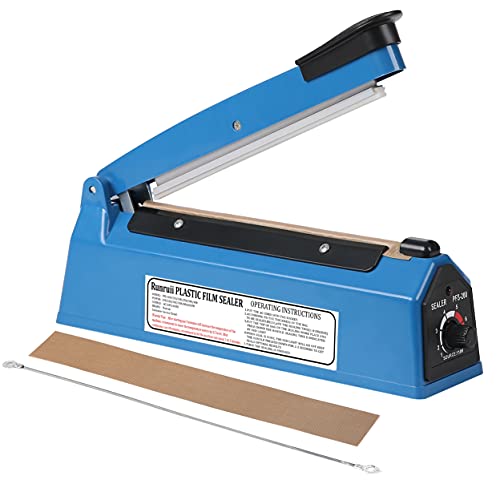
- 12-inch sealing width for larger bags
- Eight adjustable temperature settings
- No warm-up time; manual operation
Best For: Retail, grocery, and produce packaging
Best for High-Volume Work
Automatic Continuous Band Sealer

- Automatic sealing up to 2,500 bags per hour
- Digital temperature and speed controls
- Compact desktop design
Best For: Higher-volume dry-goods packaging
Best Compact Option

- Compact 8-inch sealing width
- Adjustable heat with no warm-up time
- Includes repair kit and shrink-wrap bag
Best For: Small-batch and home-based packaging
Best Tape-Based Tool

- Manual, electricity-free operation
- Built-in tape and bag-material trimmer
- Includes two packs of tape
Best For: Bakeries, markets, and service counters
Best Budget-Friendly Pick
METRONIC 12-Inch Impulse Heat Sealer

- 12-inch tabletop sealing width
- Adjustable heat for different plastics
- No warm-up required
Best For: Small businesses sealing cookies, coffee, bath bombs, and similar products
Best for Higher-Volume Work
VEVOR FR900K Continuous Band Sealer

- Automatic continuous sealing up to 16 m/min
- Digital temperature and speed controls
- Optional date, remark, or logo printing
Best For: Small production lines needing faster sealing and printing
Best Compact Starter
METRONIC 8-Inch Impulse Sealer

- Space-saving 8-inch sealing bar
- Adjustable temperature dial
- No preheating needed
Best For: Home businesses and small batches with narrow packaging
Best Continuous Sealer
Automatic Band Sealing Machine

- Automatic speeds up to 16 m/min
- Adjustable temperature, speed, and seal width
- Works with several bag materials
Best For: Small businesses handling recurring sealing batches
Best Compact Impulse Sealer

- Lightweight tabletop design
- Eight adjustable temperature settings
- No warm-up time required
Best For: Small packages and lighter-duty sealing tasks
Best Wide Impulse Sealer

- 12-inch sealing length
- Eight adjustable heat levels
- Includes three replacement strip kits
Best For: Wider bags and mixed small-business packaging
Best Value Manual Sealer – 12-Inch Impulse Heat Sealer
For small businesses seeking bag sealing machines for small businesses, this 12-inch manual impulse sealer offers a straightforward way to close PE and PP bags without warm-up time. Its adjustable temperature control and simple press-and-hold operation suit light packaging tasks in shops, kitchens, and retail settings.
Best For: Small businesses sealing plastic bags manually, including produce, groceries, and retail goods.
Pros:
- 12-inch sealing width accommodates a range of bag sizes.
- Eight temperature settings help match different bag materials.
- No warm-up time and a built-in fuse support convenient operation.
- Designed to seal more than 10,000 bags.
Cons:
- Manual operation requires holding the handle for 2–3.5 seconds per seal.
- It cannot cut bags.
- The 350-watt corded design requires access to a power outlet.
This is a practical choice when you want a wider manual sealing bar and adjustable settings rather than an automatic production line. It is best suited to moderate packaging volumes where hands-on operation is acceptable.
Best for High-Volume Work – Automatic Continuous Band Sealer
This automatic continuous band sealer is one of the more capable bag sealing machines for small businesses when speed and repeatability matter. Digital temperature and speed controls, automatic operation, and a stated capacity of up to 2,500 bags per hour make it suitable for recurring packaging work in compact commercial spaces.
Best For: Small businesses packaging cookies, candy, coffee, tea, and other dry goods at higher volumes.
Pros:
- Automatic sealing reaches a stated maximum speed of 16.4 feet per minute.
- Temperature adjusts from 32–392°F, while speed is also adjustable.
- Handles listed bag materials including polyethylene, polyester, and aluminum foil.
- Compact desktop form fits small kitchens, shops, and production areas.
Cons:
- Automatic controls and preheating may be more equipment than occasional users need.
- Its listed bag thickness range is 0.02–0.6 mm, so thicker materials may not be suitable.
- It requires an AC power source.
Choose this model if reducing repetitive hand sealing is a priority. Its compact footprint and adjustable controls balance throughput with space constraints, though a simple impulse sealer may be more economical for low-volume work.
Best Compact Option – 8-Inch Manual Impulse Sealer
For small operations that need a compact entry-level option, this 8-inch manual impulse sealer keeps the process simple. It requires no warm-up time, uses an adjustable temperature dial, and seals plastic bags by holding the handle down for several seconds.
Best For: Home-based sellers and small businesses sealing cookies, coffee, bath products, and other compact packages.
Pros:
- Compact 8-inch sealing bar suits smaller bags and limited workspaces.
- Adjustable heat helps accommodate different bag materials.
- No warm-up time simplifies occasional packaging.
- Includes a repair kit and shrink-wrap bag.
Cons:
- The 8-inch width limits the size of bags it can seal at once.
- Manual sealing requires a 3–5-second handle hold for each bag.
- It is intended for plastic bags and operates from an AC power source.
This model makes sense when workspace and purchase simplicity matter more than automation or a wide sealing bar. It is a practical fit for small batches, but higher-volume operations may benefit from a continuous band sealer.
Best Tape-Based Tool – Heavy-Duty Steel Bag Sealer
Unlike electric bag sealing machines for small businesses, this manual steel tape sealer closes bag necks with adhesive tape rather than heat. Twist the bag, slide it through the dispenser, and the built-in blade trims the tape and excess material, making it useful for quick service-counter or market packaging.
Best For: Bakeries, restaurants, supermarkets, farmers’ markets, and shops sealing produce, bread, meat, and treats.
Pros:
- Heavy-duty iron construction and an anti-skid base support stable use.
- Built-in rust-resistant trimmer cuts tape and excess bag material.
- Manual operation requires no electricity.
- Includes two packs of sealing tape.
Cons:
- It uses tape rather than a heat seal, so it is not suitable when an airtight heat seal is required.
- Users must twist the bag neck before sealing.
- Ongoing tape supplies are needed for continued operation.
This is a useful alternative for businesses that prioritize speed, portability, and simple bag closure over heat-sealed packaging. Its metal construction and integrated cutter are especially convenient for frequent counter or market use.
Best Budget-Friendly Pick – METRONIC 12-Inch Impulse Heat Sealer
For small businesses looking for bag sealing machines for small businesses, the METRONIC 12-inch impulse sealer offers a straightforward tabletop solution for sealing plastic packaging. Its adjustable temperature dial accommodates different bag materials, and it requires no warm-up time.
Best For: Home-based sellers and small businesses sealing cookies, coffee, bath bombs, and other plastic-packaged products.
Pros:
- 12-inch sealing width suits a range of small-package sizes.
- Adjustable temperature helps match different plastic materials.
- Manual operation is simple, with a 3- to 5-second press for sealing.
- Compact 1.2-pound tabletop design is easy to place in a small workspace.
Cons:
- Manual operation requires pressing the handle for every seal.
- Designed for plastic packaging rather than the broader material range supported by a continuous band sealer.
The METRONIC is a practical choice when you need occasional or moderate-volume sealing without a warm-up cycle. Its 12-inch bar gives small businesses more working room than a compact entry-level sealer, though higher-volume operations may benefit from automatic feeding.
Best for Higher-Volume Work – VEVOR FR900K Continuous Band Sealer
Businesses that need bag sealing machines for small businesses with more consistent throughput may prefer the VEVOR FR900K continuous band sealer. It automatically feeds bags at speeds up to 16 meters per minute and includes digital temperature and speed controls.
Best For: Small production lines and businesses sealing plastic, aluminum foil, compound, or paper bags where continuous operation and date or logo printing are useful.
Pros:
- Continuous automatic sealing supports faster production than a manual impulse sealer.
- Adjustable speed and thermostatic temperature controls provide process flexibility.
- Embossing and type wheels can print dates, remarks, introductions, or logos while sealing.
- All-metal carbon-steel construction is designed for long service.
Cons:
- At 750 watts and over 21 inches long, it requires more workspace and power than tabletop manual models.
- Its greater number of controls and accessories may be more than occasional users need.
- Specified bag thickness and material compatibility should be checked before purchase.
The FR900K is the most production-oriented option in this roundup. Its conveyor system, variable speed, and printing function can streamline repeat packaging tasks, but its larger footprint makes it less suitable for very small work areas or infrequent sealing.
Best Compact Starter – METRONIC 8-Inch Impulse Sealer
The METRONIC 8-inch impulse sealer is a compact option for businesses comparing bag sealing machines for small businesses. It uses a manual handle, adjustable heat settings, and a simple indicator-light process to seal plastic bags without preheating.
Best For: Small product batches, home businesses, and workspaces where an 8-inch sealing bar is sufficient.
Pros:
- Compact 8-inch format fits smaller packaging stations.
- Adjustable temperature accommodates different bag thicknesses and materials.
- No preheating is needed, helping simplify occasional sealing tasks.
- Iron construction and a pure copper coil are intended to reduce heat and work loss.
Cons:
- The shorter sealing width limits the size of bags it can handle in one pass.
- Manual pressing is required for each package.
- Extended high-speed use requires careful temperature adjustment to avoid melting the bag opening.
Choose this model when portability and a small footprint matter more than maximum throughput. It is well suited to lighter-duty packaging, while businesses regularly sealing wider bags or large batches may prefer the 12-inch or continuous model.
Best Continuous Sealer – Automatic Band Sealing Machine
For small businesses that need to package bags throughout the day, this automatic continuous band sealer offers a faster alternative to hand-operated bag sealing machines. Its adjustable speed, temperature, and seal width make it suitable for several bag materials and recurring production tasks.
Best For: Small businesses and home users sealing plastic, foil, compound, or paper bags in continuous batches.
Pros:
- Automatic sealing speeds up to 16 m/min.
- Adjustable 6–12 mm seal width works with many bags and pouches.
- Digital temperature control reaches up to 300°C.
- Handles bags with listed thicknesses of 0.02–0.16 mm on both sides.
Cons:
- At 15 pounds, it is less portable than compact manual sealers.
- Its 18.1-inch length requires more workspace than a basic tabletop impulse sealer.
This is the strongest option here for higher-volume workflows where consistent automatic operation matters more than portability. It is a practical fit for businesses sealing varied bag types on a regular schedule.
Best Compact Impulse Sealer – 8-Inch Manual Bag Sealer
This lightweight 8-inch impulse sealer is a straightforward choice for small businesses that seal shorter bags or need an easy tabletop tool. It requires no warm-up time, uses heat only when the arm is pressed, and includes eight temperature settings for different plastic packaging materials.
Best For: Retailers, produce sellers, grocery stores, and home users sealing PE or PP bags in smaller quantities.
Pros:
- Compact, lightweight design is easy to place or move.
- No warm-up time is needed before use.
- Eight temperature settings provide flexibility for different plastic bags.
- Built-in fuse supports safer operation, and a replacement element grip is included.
Cons:
- The 8-inch sealing width is limiting for wider bags.
- Manual operation requires pressing and holding the handle for about 2–3.5 seconds.
- It is intended for plastic bag sealing rather than cutting or automated production.
Choose this model when low cost, portability, and simple operation are more important than throughput. Its shorter seal length makes it better suited to small packages and lighter-duty workflows.
Best Wide Impulse Sealer – 12-Inch Manual Heat Sealer
Businesses needing a wider sealing surface can consider this 12-inch manual impulse sealer. It offers eight heat levels, no warm-up or cool-down period, and a listed maximum sealing thickness of 0.4 mm, making it a versatile option for plastic, Mylar, and kraft paper bags.
Best For: Small businesses sealing wider cookie, retail, produce, PE, PP, Mylar, or kraft paper bags.
Pros:
- 12-inch sealing length accommodates wider bags than an 8-inch model.
- Eight adjustable heat levels suit materials with different melting points.
- Starts immediately without heating or cool-down time.
- Includes three replacement strip kits and has a built-in fuse.
Cons:
- Manual operation is slower than an automatic continuous sealer for large batches.
- The unit seals but does not cut bags.
- Temperature selection requires testing the appropriate setting for each material.
This model balances a wider working area with the simplicity of impulse sealing. It is a sensible pick for small businesses that need broader seals but do not require continuous automatic feeding.
How We Picked the Best Bag Sealing Machines for Small Businesses
We focused on the features that matter most in a small-business packaging environment: sealing width, heat and speed control, material compatibility, operating method, construction, replacement-part availability, and expected workload. The selection includes straightforward manual impulse sealers for lower-volume work, steel tape sealers for quick closures, and continuous band sealers for businesses that need a more repeatable production process.
Because product needs vary widely, no single machine is ideal for every operation. A compact 8-inch model may be easier to store and sufficient for small packages, while a 12-inch unit offers more flexibility for wider bags. Continuous machines generally make more sense when operators seal many packages in succession.
Quick Comparison
| Machine type | Best suited to | Main advantage | Potential limitation |
|---|---|---|---|
| 8-inch impulse sealer | Small packages and occasional use | Compact and affordable | Limited sealing width |
| 12-inch impulse sealer | Wider bags and varied products | More usable sealing capacity | Still requires manual operation |
| Steel tape sealer | Bread, meat, cake, and lightweight bags | Fast, simple closures | Not suitable for every packaging material |
| Continuous band sealer | Regular or higher-volume production | Consistent automated sealing | Larger footprint and higher cost |
Key Buying Factors for Bag Sealing Machines for Small Businesses
Sealing Width and Bag Material
Choose a sealing bar that is wider than the package opening you regularly use. Impulse models commonly work with heat-sealable PE and PP bags, while some products also support PVC, Mylar, or coated paper. Always confirm material compatibility before buying, especially if your packaging is thick, laminated, or unusually delicate.
Manual Versus Continuous Operation
Manual impulse sealers are practical when package sizes vary or sealing volume is modest. They heat the seal only when activated, which can help control energy use and keep the machine simple. Continuous band sealers feed bags through the unit automatically and are better for repetitive workflows, consistent output, and larger daily batches.
Temperature, Speed, and Seal Quality
Adjustable temperature is important because thin films can melt while heavier materials may need more heat. Continuous models with speed control provide additional control over dwell time. Look for a clean, even seal without wrinkles, gaps, scorching, or excessive pressure marks.
Durability and Maintenance
Metal construction can be valuable in a busy workspace, but build quality should be considered alongside ease of use. Check whether heating elements, PTFE tape, cutting components, and sealing tape are replaceable. Simple maintenance and readily available consumables can reduce downtime.
Who Should Buy Which Bag Sealing Machines for Small Businesses?
- Choose an 8-inch impulse sealer if you package small items, have limited counter space, or need an inexpensive starter machine.
- Choose a 12-inch impulse sealer if you handle wider bags or want a more versatile manual option for mixed products.
- Choose a steel tape sealer for quick closures on suitable lightweight food and retail bags where presentation and speed matter.
- Choose a continuous band sealer if you seal dozens or hundreds of bags regularly and want less repetitive hand work and more consistent throughput.
Before ordering, measure your largest bag opening, identify the materials you use, estimate your daily sealing volume, and confirm the machine’s power requirements. Those four checks will usually narrow the field more effectively than price alone.