Reliable proofing is easier when your dough has a stable, draft-free environment—but countertop space is often limited. These bread proofing boxes for small kitchens range from simple lidded containers to folding, temperature-controlled proofers.
We selected options for different baking routines, including sourdough, pizza, enriched dough, and batch baking. The right choice depends on available storage, dough capacity, temperature control, and how much automation you want.
Best 10 Bread Proofing Boxes for Small Kitchens Picks for 2026
Best Overall
Brod & Taylor 6L Proofing Containers

- Two 6L containers hold up to 3,000g of dough
- Marked translucent walls make rise easy to monitor
- Stackable, dishwasher safe, and freezer friendly
Best For: Home bakers needing compact, versatile dough containers
Best Temperature Control

- Maintains temperatures from 50°F to 113°F
- Sensor displays the proofing body's real temperature
- 48-hour timer supports hands-off fermentation
Best For: Bakers seeking adjustable, timed proofing conditions
Best for Pizza Dough

- Each box holds about four to six dough balls
- Transparent, BPA-free plastic shows contents clearly
- Clip-on lids help contain moisture and prevent leaks
Best For: Pizza makers proofing multiple refrigerated dough balls
Best Compact Heated Model

- Heats from 50°F to 130°F with °C/°F switching
- 24-hour timer includes an audible completion alarm
- Folds flat for apartment, RV, and small-kitchen storage
Best For: Small-space bakers wanting portable heated proofing
Best All-Around Folding Proofer
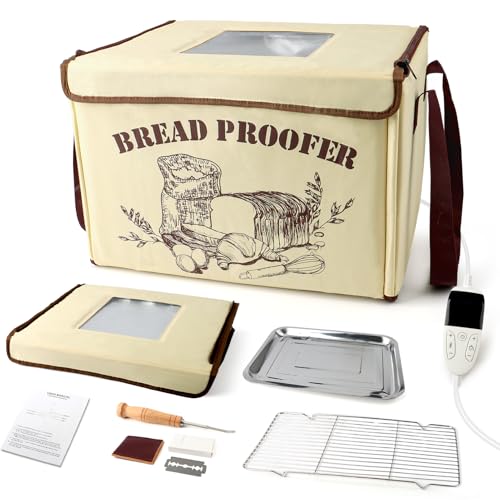
- 50–113°F adjustable temperature range
- 36-liter foldable interior with viewing window
- Includes rack, humidifier, tray, and bread knife
Best For: Home bakers needing versatile proofing and compact storage
Best Precision Control
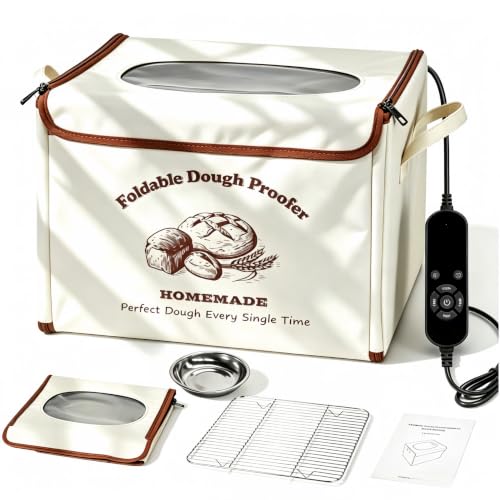
- 70–122°F range with ±1°F PID control
- Folds to 45mm for compact storage
- 1–24-hour timer with humidity accessories
Best For: Temperature-focused sourdough and yeast-dough bakers
Compact Control Pick

- Folds to about 2.36 inches for storage
- 50–113°F control with a 48-hour timer
- Three-sided heating with viewing window
Best For: Small kitchens and flexible sourdough fermentation
Complete Starter Kit

- Includes basket, lame, scraper, rack, and recipes
- 68–131°F range with a 99-hour timer
- Folds flat for cabinet or travel storage
Best For: Beginners building a complete sourdough setup
Maximum Capacity Pick
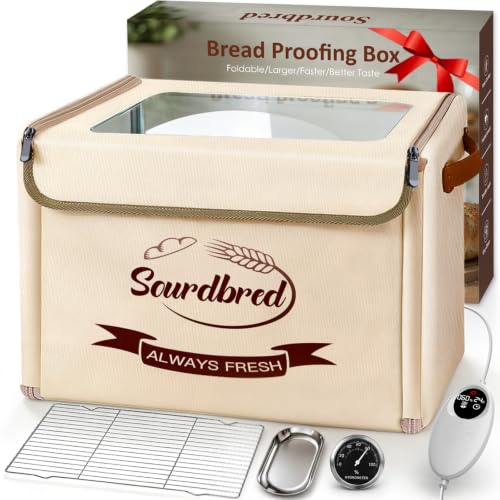
- Fits a large bowl or multiple containers
- Includes rack and water tray for humidity
- Folds to approximately 2 inches
Best For: Larger batches in kitchens with limited storage
Best Overall – Brod & Taylor 6L Proofing Containers
For bakers comparing bread proofing boxes for small kitchens, this two-pack offers a compact, low-profile way to mix, fold, monitor, and proof dough. The translucent, marked containers make it easier to track fermentation without opening the lid.
Best For: Home bakers who want space-conscious containers for sourdough, bread, and pizza dough.
Pros:
- 6-liter capacity accommodates up to 3,000 grams of dough.
- Translucent walls and volume markings help monitor rise.
- Stackable, dishwasher safe, freezer friendly, and BPA-free.
- Wide base supports stretch and coil folds inside the container.
Cons:
- These are unheated containers, so proofing temperature is not actively controlled.
- The rectangular footprint may require checking refrigerator shelf dimensions.
This is a practical choice when your priority is organized, visible dough fermentation rather than powered temperature control. The two-container format also helps streamline multiple dough batches.
Best Temperature Control – Bread Proofer Warming Box
Among bread proofing boxes for small kitchens, this warming box stands out for active temperature and time management. Its sensor, digital display, and adjustable timer are designed to make dough proofing more consistent.
Best For: Bakers who want controlled proofing temperatures for sourdough, yeast breads, and other fermentation projects.
Pros:
- Adjustable temperature range from 50°F to 113°F.
- NTC sensor monitors the actual temperature of the proofing body.
- Timer can be set for up to 48 hours with automatic shutoff.
- Foldable vinyl enclosure is designed for easy cleaning and storage.
Cons:
- At 15.75 by 13 by 9.8 inches, it needs dedicated counter or storage space.
- The open-top design may provide less enclosure than a fully closed chamber.
- It is a powered appliance rather than a simple passive proofing container.
With a 120V, 45W system and thermostat-based overheat protection, this model suits bakers who value repeatable conditions. It can also support yogurt and several other fermentation uses.
Best for Pizza Dough – Vababa 16L Proofing Boxes
For shoppers seeking bread proofing boxes for small kitchens, this two-pack provides broad, shallow storage that fits most household refrigerator shelves. Each box is sized to hold several dough balls while keeping them covered.
Best For: Pizza makers and bread bakers who proof multiple dough portions in the refrigerator.
Pros:
- Each 16-liter box can accommodate approximately four to six dough balls.
- Transparent plastic makes the contents visible at a glance.
- Clip-on lids help create a leak-resistant, covered environment.
- BPA-free boxes can also store foods and marinated ingredients.
Cons:
- The 16.45-inch length may not fit every refrigerator shelf or cabinet.
- There is no built-in heater or temperature control.
- The supplied details describe plastic construction but do not specify dishwasher safety.
This set is a strong fit for batch pizza preparation, especially when dough balls need room to expand without being exposed. Measure your refrigerator first because the long footprint is its main space consideration.
Best Compact Heated Model – Folding Bread Proofing Box
This heated folding model is designed for bakers comparing bread proofing boxes for small kitchens. Its compact chamber fits one large bowl, a banneton, or several jars, while the fold-flat design helps reduce storage demands.
Best For: Apartment bakers, RV users, and sourdough beginners who want powered proofing without a permanently bulky appliance.
Pros:
- Temperature range spans 50°F to 130°F with a Celsius/Fahrenheit switch.
- Built-in 24-hour timer and audible alarm support scheduled proofing.
- Three-sided heat and an NTC sensor promote controlled warming.
- Folds flat and includes automatic overheat protection.
Cons:
- Its chamber is intended for one large mixing bowl up to 5 liters rather than large batches.
- It requires an electrical outlet and has a 100W power rating.
- The listed dimensions and size descriptions differ, so buyers should verify the usable interior space.
This model balances active temperature control with storage-friendly construction. It is particularly useful where counter space is limited and you want a timer to reduce the need for frequent checking.
Best All-Around Folding Proofer – Folding Bread Proofing Box
For bakers comparing bread proofing boxes for small kitchens, this folding model combines a generous 36-liter interior with compact storage. Its three-sided heating, adjustable 50–113°F temperature range, viewing window, and 24-hour timer support steady proofing for sourdough, pizza dough, rolls, and other fermentation projects.
Best For: Home bakers who want a spacious, versatile proofer that folds away between baking sessions.
Pros:
- Three-sided heating with 1°F adjustment and 50–113°F range.
- Foldable design, viewing window, and five-layer insulation suit compact kitchens.
- Includes a metal rack, humidifying box, tray, and bread knife.
- 24-hour timer supports overnight proofing and other fermentation tasks.
Cons:
- Its 36-liter footprint is larger when set up than a simple dough container.
- The 45-watt heating system may be less powerful than higher-wattage proofers.
This is a strong choice if you need one appliance for multiple dough batches and low-temperature fermentation. The included humidifying box is particularly useful for longer rises, while the foldable construction helps offset its larger working size.
Best Space-Saving Dough Container – 5-Quart Dough Proofing Container
If your small kitchen needs a simpler alternative to powered bread proofing boxes, this 5-quart dough container keeps proofing contained and easy to monitor. The translucent, BPA-free polypropylene tray holds up to 6.6 pounds of dough, while the lid helps retain moisture during fermentation.
Best For: Bakers who want an affordable, low-storage container for bulk dough, stretch-and-fold work, and refrigerator proofing.
Pros:
- Holds up to 6.6 pounds of dough or up to six dough balls.
- Volume markings and translucent walls make rising easy to track.
- Stackable design works in refrigerators and inside the compatible folding proofer.
- Wide base supports mixing, stretching, and coil folds in the container.
Cons:
- It provides humidity retention but does not actively control temperature.
- This listing includes one container, so multiple dough batches require additional units.
This container is a practical pick when counter and storage space matter more than powered temperature control. It is especially useful for dough handling and cold storage, but bakers seeking consistent warmth will need a separate proofer or suitable warm location.
Best Precision Control – Foldable PID Dough Proofer
For bakers who prioritize temperature accuracy, this foldable proofer brings PID control to a compact setup. It offers a 70–122°F range with stated ±1°F precision, a 1–24-hour timer, and a 28-liter capacity, making it a useful option among bread proofing boxes for small kitchens.
Best For: Sourdough and yeast-dough bakers who want precise temperature and timed proofing in a fold-away design.
Pros:
- PID temperature control targets accuracy up to ±1°F across 70–122°F.
- Folds to 45mm thick for easier storage in space-limited kitchens.
- 1–24-hour timer supports short and extended fermentation schedules.
- Includes a stainless steel bowl, hygrometer, and iron stand.
Cons:
- Its 235-watt design uses substantially more power than the 45-watt folding model.
- The interior capacity is 28 liters, smaller than the 36-liter alternative.
- Care instructions call for wiping the unit clean rather than rinsing it.
This model is the better fit when repeatable temperature matters more than maximum capacity. Its thin folded profile is helpful for small kitchens, and the included hygrometer and water bowl support humidity management during proofing.
Compact Control Pick – Folding Bread Proofer
For shoppers comparing bread proofing boxes for small kitchens, this folding model balances controlled fermentation with easy storage. Its three-sided heating system, 50–113°F temperature range, 48-hour timer, clear viewing window, and 2.36-inch folded profile make it practical for everyday dough proofing without permanently occupying valuable counter space.
Best For: Small kitchens, sourdough bakers, and home fermenters who want broad temperature control and compact storage.
Pros:
- Folds to approximately 2.36 inches and includes a built-in handle for storage and portability.
- Three-sided heating and five-layer insulation promote consistent warmth.
- Temperature adjusts from 50–113°F, with a timer of up to 48 hours and automatic shutoff.
- Viewing window, temperature sensor, waterproof interior, and included metal rack improve monitoring and cleanup.
Cons:
- The 16.34-by-11.81-by-11.81-inch footprint still requires counter space during use.
- The Oxford-cloth construction is less rigid than a hard-sided proofing cabinet.
This is a strong space-conscious option when fold-flat storage matters as much as fermentation control. Its lower minimum temperature also gives it flexibility for different dough and starter routines.
Complete Starter Kit – Sourdough Proofing Box
This bread proofing box for small kitchens is aimed at bakers who want both a warming chamber and the basic tools to begin making sourdough. It folds flat for cabinet or travel storage, uses three heating zones, and offers 68–131°F control with a 99-hour timer for longer fermentation schedules.
Best For: New sourdough bakers who want an all-in-one setup with included shaping and scoring accessories.
Pros:
- Includes a 9-inch proofing basket, five-blade lame, metal scraper, metal rack, and recipe ebook.
- Temperature range of 68–131°F and a timer of up to 99 hours support varied fermentation needs.
- Three heating zones and five-layer insulation are designed for stable warmth.
- Folds flat and includes a transparent viewing panel for easier storage and monitoring.
Cons:
- At 15.7 by 11.8 by 11.8 inches when open, it still needs a dedicated setup area while operating.
- The 68°F minimum offers less low-temperature flexibility than some competing proofers.
- The included accessories may be unnecessary for bakers who already own sourdough tools.
Choose this model if convenience and included equipment are priorities. Its long timer and higher temperature ceiling are useful for extended fermentation and broader kitchen projects, while the collapsible design helps limit storage demands.
Maximum Capacity Pick – Extra-Large Folding Proofer
Among bread proofing boxes for small kitchens, this extra-large folding proofer stands out for its interior capacity and oversized viewing window. It provides three heating areas, five-layer insulation, 66–108°F temperature control, and a 1–48-hour timer, then folds to roughly 2 inches for easier cabinet or drawer storage.
Best For: Bakers who need room for a large bowl or multiple containers but still want a foldable design.
Pros:
- Large 16.5-by-12-by-12-inch interior accommodates approximately one large bowl and four large bottles.
- Extra-large 12.8-by-9-inch viewing window makes it easier to monitor dough without opening the box.
- Three heating areas, five-layer construction, and a 66–108°F control range support consistent proofing.
- Includes a metal rack, water tray, controller, and user guide; folds to about 2 inches.
Cons:
- The extra-large footprint takes more counter space during use than a compact proofer.
- The temperature range is narrower than models offering a lower minimum or higher maximum.
- Hand-wash care may require more maintenance than fully rigid, wipe-clean equipment.
This model makes the most sense when capacity is the deciding factor. The large window and included water tray add practical convenience, while the slim folded profile keeps its storage footprint manageable between baking sessions.
How We Picked These Bread Proofing Boxes for Small Kitchens
We focused on the practical constraints of compact kitchens: countertop footprint, storage, capacity, temperature range, timer flexibility, and ease of cleaning. The selection includes both passive containers and heated proofing boxes so you can match the tool to your baking style and budget.
We also considered whether each design is useful for common home-baking tasks, such as proofing a single loaf, holding pizza dough, managing sourdough fermentation, or handling larger batches. Foldable models can be especially helpful when a dedicated appliance cannot remain on the counter.
Quick Comparison
| Type | Best For | Main Advantage | Watch For |
|---|---|---|---|
| Proofing container | Occasional bread and pizza baking | Simple, compact, and usually easy to clean | Less temperature control |
| Heated proofing box | Consistent fermentation | Adjustable warmth and timed cycles | Needs outlet and storage space |
| Folding proofer | Small kitchens | Collapses for storage | Setup may take a few minutes |
| Large-capacity box | Multiple loaves or pizza dough | Supports bigger batches | Uses more counter space when open |
Key Buying Factors
Size and Storage
Measure the space where you will use the proofer, not just the cupboard where it will be stored. A folding model is often the best compromise for a narrow counter. Containers should fit comfortably in your refrigerator or pantry if you use cold fermentation.
Capacity and Dough Format
Check the stated dough capacity and interior dimensions. A compact container may suit one loaf, while a 16-liter box or extra-large folding model is more practical for several pizza dough balls. Leave room for expansion so dough does not press against the lid.
Temperature Control
Basic containers rely on room temperature. Heated units provide more predictable results in cool homes, but look for a useful low-temperature range, clear controls, and even heating. A broad range is helpful for sourdough, yeast dough, and starter maintenance.
Timers, Racks, and Cleaning
A timer can prevent an overnight proof from running longer than intended. Racks are useful when you need to elevate bowls or baskets, while removable trays and smooth interiors simplify cleanup. Confirm that accessories fit your preferred proofing vessel.
Who Should Buy Which Bread Proofing Boxes for Small Kitchens?
Choose a simple proofing container if you mainly bake one loaf at a time and already have a reasonably warm kitchen. Select a folding heated box if temperature consistency matters but permanent counter space does not. A larger box suits families and frequent pizza makers, while a model with precise controls and a longer timer is better for sourdough bakers who want repeatable fermentation.
For most small kitchens, prioritize a design that stores easily and matches your typical dough quantity. Extra features are useful only when they solve a real problem: controlled warmth in winter, timer-based scheduling, or enough room for your usual batch.