Finding the right corn grinder means matching grind control, capacity, and power to the way you plan to mill. The best models make it easier to produce anything from coarse meal to finer flour while keeping operation practical and consistent.
This roundup compares 10 manual and electric options, including cast-iron hand mills, compact dry-grain grinders, and heavy-duty machines designed for larger batches.
Best 10 Corn Grinders with Adjustable Grind Settings Picks for 2026
Heavy-Duty Pick
VEVOR 3000W Adjustable Grain Mill

- 3000W motor for continuous dry grinding
- Adjustable thickness for varied textures
- Cast-iron construction with steel funnel
Best For: High-volume dry grinding and heavy-duty use
Manual Classic
Corona Adjustable Cast-Iron Grain Mill

- Manual operation needs no electricity
- Adjusts from coarse to fine textures
- Includes clamp and mounting hardware
Best For: Home cooks making masa, flour, and traditional recipes
Compact Precision Pick

- 28,000-RPM motor for rapid grinding
- 30–300 mesh fineness range
- Timed controls and compact stainless-steel housing
Best For: Fast, controlled grinding of dry grains and spices
Large-Capacity Workhorse
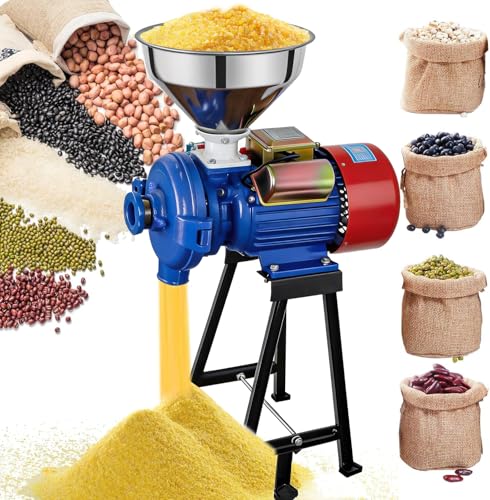
- 3000W motor for dry crop processing
- Knob adjusts coarse to ultra-fine output
- Large stainless-steel feeding hopper
Best For: Making flour, starch, and animal feed from dry crops
Best Electric Capacity

- 1300W motor with push-button operation
- Five sieves from 2 to 8 mm
- Includes a 13.2-gallon detachable bucket
Best For: High-volume dry grain or animal-feed grinding
Best High-Hopper Design

- 5.5-inch high hopper holds more grain
- Adjustable plate for coarse-to-fine grinding
- Manual cast-iron design with wooden handle
Best For: Traditional tabletop grinding with fewer hopper refills
Best with Extra Features
3000W Adjustable Electric Grain Mill
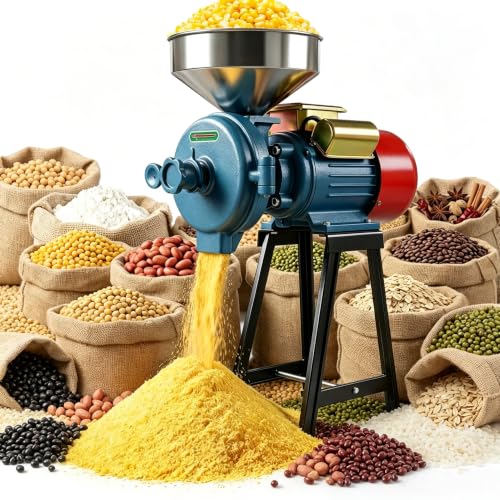
- Knob adjusts from coarse to fine
- 3000W motor with up to 155 lb/hour output
- Stable cast-iron frame with cooling ventilation
Best For: High-volume dry corn and grain grinding
Best Manual Option
High-Hopper Hand Crank Corn Mill

- Adjustable coarseness without electricity
- Large hopper minimizes refilling
- Handles corn, grains, beans, spices, and coffee
Best For: Hands-on, outlet-free grinding
Best Wet-and-Dry Pick

- Adjustable thickness for varied textures
- Detachable discs support wet and dry grinding
- 11-inch hopper with high stated corn output
Best For: Versatile home or commercial grain processing
Heavy-Duty Pick – VEVOR 3000W Adjustable Grain Mill
For shoppers comparing corn grinders with adjustable grind settings, this VEVOR model emphasizes power, durability, and versatility. Its adjustment control is designed for changing the thickness of corn, wheat, rice, soybeans, spices, and other dry ingredients.
Best For: High-volume dry grinding and users who want a sturdy, commercial-style machine.
Pros:
- Powerful 3000W motor supports continuous dry grinding.
- Adjustable thickness control handles textures from coarse to fine.
- Cast-iron body and grinding plates are built for heavy use.
- Stainless-steel funnel supports consistent feeding.
Cons:
- At 46.7 pounds, it is substantially heavier than compact mills.
- Its 500 g capacity may require refilling for larger batches.
- Designed for dry ingredients rather than wet grinding.
This is a strong option when motor power and rugged construction matter more than portability. The adjustment control also makes it practical for switching between cornmeal, flour, and other dry powders.
Manual Classic – Corona Adjustable Cast-Iron Grain Mill
The Corona is a practical choice among corn grinders with adjustable grind settings when you prefer hands-on operation. Its manual adjustment supports coarse or fine textures for masa, tortillas, tamales, flour, cracked grains, spices, and coffee.
Best For: Home cooks seeking a durable, electricity-free mill for traditional recipes and modest batches.
Pros:
- Manual operation works without electricity.
- Adjustable grinding supports coarse-to-fine textures.
- Cast-iron construction with food-safe tin plating is designed for durability.
- Includes a clamp, handle, hopper, plates, and mounting hardware.
Cons:
- Manual cranking requires more effort than an electric grinder.
- Countertop clamp fits surfaces up to 1.45 inches thick.
- Its 1.4-pound capacity is better suited to home-scale batches.
Choose this mill if reliability and simple, electricity-free operation are priorities. The included mounting components help keep it stable, while the adjustment makes it useful for both corn-based recipes and other dry ingredients.
Compact Precision Pick – VEVOR 2100W Swing-Type Mill
This compact VEVOR is one of the more flexible corn grinders with adjustable grind settings, offering selectable timing and a stated fineness range of 30 to 300 mesh. It is intended for dry grains, corn, coffee, spices, and similar ingredients.
Best For: Users who want fast, compact grinding with timed controls and a broad fineness range.
Pros:
- 28,000-RPM motor can produce fine powder quickly.
- Offers 5-, 15-, and 30-second timing options.
- Grinding fineness ranges from 30 to 300 mesh.
- Swinging 270-degree design and an 800 g cup help improve processing.
Cons:
- Not suitable for wet, oily, or sticky materials.
- Requires rest periods after up to five minutes of continuous work.
- Hard ingredients may need to be cut before grinding.
Its compact stainless-steel housing and timed operation make it convenient for kitchens or small work areas. It is especially appealing when you need quick, repeatable results but primarily process dry ingredients.
Large-Capacity Workhorse – 3000W Electric Corn Mill
For buyers seeking corn grinders with adjustable grind settings and a commercial-style motor, this 3000W electric mill offers a thickness knob for coarse through ultra-fine results. It is designed for dry corn, wheat, rice, sorghum, oats, and coffee beans.
Best For: Users processing multiple types of dry crops for flour, starch, or animal feed.
Pros:
- 3000W copper motor is rated at 1460 r/min for efficient grinding.
- Adjustable coarseness control supports different powder textures.
- Large stainless-steel hopper allows smoother, less interrupted feeding.
- Galvanized body and cast-iron head provide a robust construction.
Cons:
- Strictly for dry grinding; soaked ingredients should not be used.
- Correct operation requires starting the machine before adding grain.
- The supplied notes do not specify capacity, dimensions, or weight.
This model makes sense for shoppers who want a powerful, multipurpose dry grinder with straightforward coarseness adjustment. Follow the recommended startup and gradual-feeding procedure to help prevent overloading or jams.
Best Manual Value – Cast-Iron Adjustable Corn Grinder
If you want corn grinders with adjustable grind settings without using electricity, this cast-iron hand mill offers straightforward control. Its adjustable grinding plate switches between coarse grain and finer powder, while the crank and spiral auger support small-batch kitchen tasks.
Best For: Home cooks, bakers, and hobbyists who want a manual grinder for corn and other pantry staples.
Pros:
- Adjustable plate supports coarse-to-fine grinding.
- Cast-iron construction and wooden handle provide a sturdy, comfortable setup.
- Works with corn, coffee beans, rice, soybeans, chickpeas, and dried peppers.
- Clamps to tables or counters up to about 1.57 inches thick.
Cons:
- Manual cranking requires more effort than an electric mill.
- Designed for tabletop mounting rather than freestanding use.
- Cleaning is limited to hand washing or wiping; the product should be kept dry.
This is a practical choice when adjustable coarseness and hands-on control matter more than speed. Its broad ingredient compatibility makes it useful for occasional grinding, custom spice blends, and small-batch recipes.
Best Electric Capacity – 1300W Corn and Grain Mill
For faster, higher-volume work, this electric mill is a strong option among corn grinders with adjustable grind settings. Instead of turning a plate, you select one of five included sieves—2, 3, 4, 6, or 8 mm—to change the milling fineness.
Best For: Households or small farms that need powered grinding for dried corn, animal feed, grains, spices, and seasonings.
Pros:
- 1300-watt motor provides powered grinding with simple start and stop buttons.
- Five replaceable sieves offer multiple fineness options.
- Large 13.2-gallon detachable bucket supports collection and continuous feeding.
- Detachable hopper and bucket simplify cleaning, and a one-year warranty is included.
Cons:
- Requires a 110-volt electrical connection.
- Intended for dry materials; the motor must be protected from water.
- Its larger bucket-and-motor design may be more equipment than needed for occasional kitchen use.
This model makes the most sense when throughput and sieve-based adjustment are priorities. The included accessories and substantial collection bucket suit repeated grinding, while the electric motor reduces manual effort.
Best High-Hopper Design – Manual Cast-Iron Corn Mill
This tall manual mill is a useful pick if you prefer corn grinders with adjustable grind settings and a larger hopper. Its adjustable grinding plate lets you move from coarse grain toward fine powder, while the hand crank gives direct control over the pace.
Best For: Home users who want a traditional hand-powered grinder with a high 5.5-inch hopper for small-batch food preparation.
Pros:
- Adjustable grinding plate supports different coarseness levels.
- High hopper is designed to hold more grain and help reduce kernel scatter.
- Food-safe cast iron and a wooden handle offer a durable, comfortable design.
- Suitable for corn, coffee beans, rice, soybeans, chickpeas, and dried peppers.
Cons:
- Manual operation is slower and more labor-intensive than electric grinding.
- Requires tabletop mounting and fits edges up to about 1.45 inches thick.
- Hand cleaning or wiping is required after use.
The high-hopper format is helpful when you want fewer refills during a grinding session, while the adjustable plate adds flexibility for different recipes. Choose it for traditional, electricity-free use rather than maximum speed.
Best with Extra Features – 3000W Adjustable Electric Grain Mill
For shoppers comparing corn grinders with adjustable grind settings, this heavy-duty electric model offers simple knob control from coarser corn pieces to finer corn flour. Its 3000W motor runs from a standard 110V outlet and is designed for high-volume dry grain processing.
Best For: Home farms, food processing, and users who need fast dry-grain grinding with a sturdy setup.
Pros:
- Adjustable thickness knob supports coarse-to-fine grinding.
- 3000W motor can process up to 155 pounds per hour according to the supplied specifications.
- Cooling ventilation hood, cast-iron stand, and nonslip feet support extended, stable operation.
- Suitable for corn, wheat, rice, barley, spices, coffee, nuts, and other listed ingredients.
Cons:
- Large industrial-style footprint may be excessive for small kitchens.
- Designed for dry grinding rather than wet processing.
- Its 500 g capacity may require repeated loading during larger batches.
This is the strongest choice for buyers prioritizing power, stability, and adjustable dry-grind thickness. The substantial frame and ventilation features make it better suited to demanding use than casual, occasional grinding.
Best Manual Option – High-Hopper Hand Crank Corn Mill
This hand-crank model is a practical alternative for shoppers seeking corn grinders with adjustable grind settings without using electricity. Its adjustable coarseness control lets you change the thickness of the grind, although the supplied notes indicate that it is not intended to produce very fine flour.
Best For: Hands-on grinding of corn, grains, beans, spices, and coffee in settings without an electrical power source.
Pros:
- Manual operation requires no electricity.
- Adjustable coarseness helps control the texture without regrinding repeatedly.
- Large hopper reduces the need for frequent refilling.
- Aluminum-alloy construction and a 7.52-pound weight support stable placement.
Cons:
- Manual cranking is slower and more labor-intensive than electric grinding.
- Not designed for very fine flour.
- Installation requires attaching the grinder, and the supplied installation note is incomplete.
Choose this mill when portability from outlet-free use and manual control matter more than speed or ultra-fine results. The large hopper and adjustable setting make it more versatile than a basic fixed-coarseness hand mill.
Best Wet-and-Dry Pick – Commercial 3000W Grain Mill
For buyers comparing corn grinders with adjustable grind settings for broader food-processing tasks, this 3000W electric mill combines thickness adjustment with separate discs for dry and wet grinding. Its large funnel, high stated throughput, and reinforced frame are aimed at frequent home or commercial use.
Best For: Users who want one heavy-duty machine for corn, grains, spices, coffee, and selected wet preparations such as soybean or rice slurry.
Pros:
- Adjustable thickness supports different flour and grain textures.
- 3000W motor runs at 2800 RPM, with stated output of up to 70 kg/h for corn.
- Detachable cast-iron and sand grinding discs support dry and wet applications.
- 11-inch hopper, cooling ventilation, cross braces, and nonslip feet support productive operation.
Cons:
- Large, heavy commercial-style design may not suit limited counter space.
- Wet grinding requires changing to the appropriate detachable disc.
- High-powered operation calls for reasonable intervals to manage heat.
This is the most versatile option of the three if wet processing and larger batches are important. Its dual-disc design expands its uses, while the adjustable thickness control keeps it useful for different corn and grain textures.
How We Picked the Best Corn Grinders with Adjustable Grind Settings
We focused on models that offer adjustable coarseness or thickness settings, since grind control is the defining feature for this roundup. We also considered motor power or manual leverage, hopper capacity, construction, intended grain types, cleaning demands, and the difference between occasional home use and repeated batch milling.
The selection includes both hand-crank and electric designs. Manual mills can be useful when electricity is unavailable and typically offer straightforward maintenance, while electric machines are better suited to faster processing and larger quantities. Product descriptions and stated specifications should still be checked carefully before purchase, especially for supported moisture levels and allowable grain types.
Quick Comparison
| Best For | Recommended Style | What to Look For |
|---|---|---|
| Occasional home milling | Manual cast-iron grinder | Stable clamp or base, adjustable plates, comfortable handle |
| Fast corn and grain processing | Electric mill | Higher wattage, cooling design, overload protection |
| Coarse meal and flour flexibility | Adjustable electric or manual model | Clear thickness range and repeatable settings |
| Large or frequent batches | Heavy-duty electric grinder | Robust housing, large funnel, durable burrs or blades |
Key Buying Factors for Corn Grinders with Adjustable Grind Settings
Adjustment Range and Consistency
Look for a clearly described coarse-to-fine range rather than a vague “adjustable” label. A grinder with repeatable settings is easier to use when you need similar meal or flour results across multiple batches. Fine settings may require slower feeding, while coarse settings can be better for cracked corn or some feed applications.
Power, Capacity, and Workload
Electric wattage can indicate processing capability, but it does not guarantee performance by itself. Consider hopper size, rated output, duty cycle, and whether the machine is intended for dry grains only. Manual mills are slower but can be more suitable for small quantities and controlled, hands-on milling.
Build Quality and Stability
Cast iron and reinforced metal frames can provide stability, particularly for hand-crank use. For electric models, inspect the housing, funnel, grinding components, ventilation, and any stated safety features. A secure setup reduces vibration and makes adjustment easier.
Cleaning and Maintenance
Fine corn particles can collect around grinding chambers and adjustment parts. Removable components, accessible surfaces, and clear cleaning instructions are valuable. Never wash electrical parts unless the manufacturer explicitly permits it, and avoid milling wet or oily ingredients in machines designed for dry grains.
Who Should Buy Which Corn Grinders with Adjustable Grind Settings?
Choose a Manual Mill If…
You mill occasionally, want a simple design, or need a grinder that does not depend on power. A high-hopper cast-iron hand mill is a practical choice for users comfortable with slower output and manual effort.
Choose an Electric Mill If…
You process corn frequently or need results quickly. Electric models are better for larger batches, but confirm their supported grain types, operating limits, and ventilation requirements before running extended cycles.
Choose a Heavy-Duty Model If…
You value higher throughput and a sturdier frame for repeated use. These machines make the most sense when capacity and speed matter more than compact storage or the lowest purchase price.