Choosing the right grinder can improve consistency, reduce preparation time, and help a small food, spice, or herbal-products business control operating costs. The best option depends on batch size, desired texture, cleanup requirements, and available workspace.
This roundup compares ten manual and electric models, including compact grinders for occasional preparation and higher-capacity machines for more demanding production schedules.
Best 10 Herb Grinders for Small Businesses Picks for 2026
Commercial Power Pick
CGOLDENWALL 700g Electric Grain Grinder

- 700g chamber with 2400W motor
- Safety lid and overload protection
- Three-minute cycles with cooldowns
Best For: Small commercial operations grinding dry materials in larger batches
Quiet Countertop Choice
SHARDOR Timed Electric Blade Grinder

- 70g removable stainless-steel bowl
- 0–30-second timed control
- Dry grinding with hand-wash cleanup
Best For: Small-batch dry grinding in compact or noise-conscious workspaces
Effort-Saving Personal Pick

- Touch-activated, no-twist operation
- Tap control adjusts grind texture
- Rechargeable and wipe-clean design
Best For: Quick, small herb-grinding tasks where portability and ease matter
Compact Culinary Mill
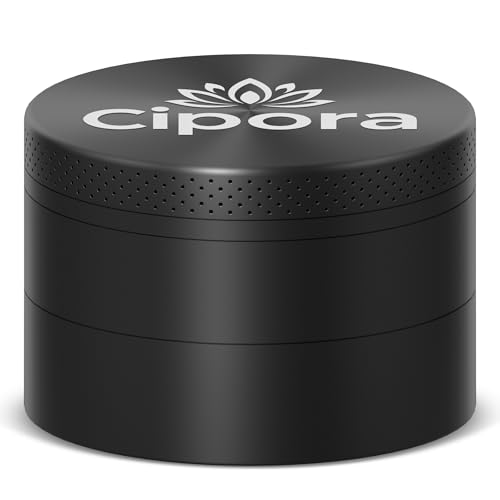
- Manual three-piece design with bottom storage chamber
- Handles dry herbs, spices, peppercorns, and rock salt
- Compact, magnetic-lid format for kitchens and mobile setups
Best For: Small-batch culinary seasoning and portable cooking setups
High-Speed Electric Grinder
200W Stainless Steel Herb Grinder

- Grinds up to 50 grams in roughly 3–15 seconds
- Press-down lid controls operation and grind duration
- Stainless steel blades handle herbs, spices, seeds, and more
Best For: Fast indoor small-batch ingredient preparation
Simple Aluminum Mill

- Manual, electricity-free operation for dry seasonings
- Anodized aluminum body for repeated kitchen use
- Rounded edges provide a comfortable twisting grip
Best For: Occasional small-quantity seasoning preparation
Hands-Free Pick

- Rechargeable button-operated design
- Adjustable texture with short pulses
- Compact kit with tray and replacement chain
Best For: Low-effort, light-duty business grinding
Display-Friendly Option
Iridescent 2-Inch Spice Grinder

- Four-piece grinding and screening design
- Fine mesh and lower collection chamber
- Compact metal body with iridescent finish
Best For: Portable, organized manual preparation
Practical Workhorse

- Sharp teeth for controlled manual grinding
- Four-piece screen and collection layout
- Compact metal design with scraper
Best For: Light everyday herb and spice preparation
Commercial Power Pick – CGOLDENWALL 700g Electric Grain Grinder
For small businesses needing herb grinders for small businesses with higher throughput, the CGOLDENWALL offers a 700g stainless-steel chamber and 2400W motor. Its commercial-oriented design is suited to dry materials, but the short operating cycle and required rest periods are important considerations.
Best For: Small commercial operations processing dry herbs, spices, grains, and cereals in larger batches.
Pros:
- 700g capacity and 28,000-rpm high-speed motor.
- Safety lid switches stop operation when the lid is opened.
- Overload protection, spare blades, sieve, cleaning brush, and carbon brushes included.
Cons:
- Each grinding cycle should run no longer than three minutes.
- The machine needs a five-to-10-minute rest after each cycle.
- Materials must be dry and should not exceed two-thirds of the tank.
This is the strongest capacity choice in the group for batch-oriented work. Buyers should plan around its duty cycle and dry-material requirements rather than treat it like a continuous-production mill.
Quiet Countertop Choice – SHARDOR Timed Electric Blade Grinder
Small businesses seeking herb grinders for small businesses may prefer a compact machine for modest daily batches. The SHARDOR combines a 70g removable stainless-steel bowl with a 0–30-second timer, making repeatable short runs easier to manage.
Best For: Small shops or prep areas that need compact, quieter grinding for dry herbs, spices, seeds, and coffee.
Pros:
- Timed control supports repeatable coarse-to-fine results.
- Removable 70g stainless-steel bowl is easy to fill, pour, and hand wash.
- Safety-lock lid and stated in-house average noise level of 63 dB.
Cons:
- Its 70g capacity is better for smaller batches than high-volume production.
- For dry ingredients only; wet grinding is not supported.
- The bowl must be hand washed and is not dishwasher-safe.
The SHARDOR is a practical fit when footprint, timing, and lower operating noise matter more than maximum capacity. Its removable bowl also simplifies flavor-change cleanup between batches.
Portable Manual Option – 2.5-Inch Zinc Alloy Spice Grinder
For businesses that need a simple backup or portable tool, this 2.5-inch manual grinder offers a compact alternative among herb grinders for small businesses. Its lightweight design and storage compartment make it easy to carry, though its small capacity limits production volume.
Best For: Mobile use, occasional preparation, or keeping a small manual grinder available as a backup.
Pros:
- Compact 2.5-inch form is easy to store and transport.
- Manual operation needs no electricity or charging.
- Includes a storage compartment for added portability.
Cons:
- Small size is not designed for high-volume business processing.
- Manual operation requires more hands-on effort than electric models.
- The supplied details do not specify a detailed grind-adjustment system.
This grinder makes sense as a low-cost, portable tool rather than a primary production machine. It is most useful where batches are small and portability outweighs speed.
Effort-Saving Personal Pick – Wakit KLR Electric Grinder
The Wakit KLR is a convenient option for small businesses comparing herb grinders for small businesses where quick, low-effort preparation matters. Its touch-activated motor and Ball & Chain system let users adjust texture with tap duration, while the rechargeable design avoids manual twisting.
Best For: Small, quick herb-grinding tasks where portability and reduced wrist strain are priorities.
Pros:
- Touch-activated operation eliminates traditional twisting.
- Tap duration controls coarser or finer results.
- Rechargeable design includes a Micro USB cable and is easy to wipe clean.
Cons:
- Its supplied details do not state a batch capacity.
- The optional tray is sold separately.
- Coverage is a six-month limited warranty with registration.
The Wakit is best viewed as a convenience-focused grinder for smaller tasks, not a documented high-capacity commercial mill. Its strongest advantages are ease of use, portability, and quick surface cleanup.
Compact Culinary Mill – 2.5-Inch Zinc Herb Mill
For small businesses that need herb grinders for small businesses in a kitchen, catering setup, or mobile cooking kit, this manual zinc mill offers a compact way to process dry herbs and spices. Its three-piece design separates finely ground seasoning and provides a bottom chamber for short-term storage.
Best For: Small food businesses, BBQ setups, and mobile kitchens that prefer manual grinding for modest quantities of dry culinary seasonings.
Pros:
- Designed for peppercorns, rosemary, thyme, oregano, basil, chili flakes, and other dry spices.
- Precision-cut zinc alloy construction is intended to handle harder ingredients such as peppercorns, coriander seeds, and rock salt.
- Magnetic lid helps prevent spills and retain aroma while the bottom chamber stores ground seasoning.
- Compact 2.5-inch size suits drawers, spice racks, camping, RVs, and BBQ setups.
Cons:
- Manual operation is less practical for high-volume or continuous production.
- The compact chamber is better suited to small batches than bulk preparation.
- Intended for culinary use with dry ingredients only.
This is a sensible choice when portability, simple cleanup between batches, and small-quantity spice preparation matter more than electric speed or large capacity.
High-Speed Electric Grinder – 200W Stainless Steel Herb Grinder
For small businesses looking for herb grinders for small businesses with faster batch preparation, this 200-watt electric model can process up to 50 grams of herbs or spices in 3 to 15 seconds. Its press-down lid controls operation and lets users adjust the grind by varying pressing time.
Best For: Indoor food-preparation businesses that need quick, repeatable grinding of herbs, spices, seeds, coffee beans, nuts, or grains.
Pros:
- 200-watt motor and 30,000 RPM operation support fast grinding.
- 50-gram capacity is suitable for small production batches.
- Stainless steel blades can process a wide range of dry ingredients.
- Transparent press-down lid provides simple operation and stops the blades when released.
Cons:
- Electric operation requires access to a 110-volt power source.
- Grind consistency is controlled by pressing time rather than a preset adjustment.
- Its indoor recommendation and compact capacity may limit use in mobile or high-volume settings.
Among these options, this grinder is the better fit when speed and ingredient versatility are priorities, provided the business can work near a suitable power outlet.
Simple Aluminum Mill – 2.2-Inch Manual Spice Mill
Businesses seeking herb grinders for small businesses that favor a straightforward, low-tech tool may find this 2.2-inch aluminum spice mill suitable for basic kitchen prep. It is designed for twisting dry culinary seasonings by hand before adding them to recipes.
Best For: Small kitchens and food-preparation operations handling occasional, modest amounts of dried rosemary, oregano, thyme, basil, and similar seasonings.
Pros:
- Simple manual operation requires no electricity or batteries.
- Aluminum body with an anodized finish is intended for repeated kitchen use.
- Rounded exterior edges support a comfortable grip while twisting.
- Small size is convenient for storage in a kitchen workspace.
Cons:
- Manual grinding is not suited to rapid or high-volume preparation.
- Designed for dry culinary seasonings rather than a broad range of ingredients.
- Requires hand washing and thorough drying after use.
This is the most basic option in the group: a compact manual mill for businesses that need occasional seasoning preparation without adding an electrical appliance to the workspace.
Hands-Free Pick – Mini Wakit Electric Grinder
For small businesses that need quick, repeatable preparation, the Mini Wakit offers an electric alternative to manual herb grinders. Its button-operated ball-and-chain system lets you adjust texture with short pulses, making it useful for dried culinary herbs, spices, and similar materials.
Best For: Small businesses seeking compact, low-effort grinding with adjustable texture control.
Pros:
- Rechargeable automatic operation eliminates manual twisting.
- Short-pulse controls help adjust from coarser to finer textures.
- Compact design includes a tray, charging cable, and replacement ball and chain.
- Moist or alcohol towelettes can simplify routine cleaning.
Cons:
- Plastic construction may be less suited to heavy-duty commercial use.
- Operation requires charging via the included Micro USB cable.
- Users need to pulse manually to achieve the desired consistency.
The Mini Wakit is a practical choice when reducing wrist strain and saving counter space matter more than large-batch capacity. Its compact footprint and simple controls fit light-duty business workflows.
Display-Friendly Option – Iridescent 2-Inch Spice Grinder
This compact manual grinder is a colorful option for small businesses that prefer hands-on control over dried herbs, spices, and seasonings. Its four-piece layout separates grinding, screening, and collection, while the fine mesh screen helps sort smaller particles.
Best For: Small businesses wanting a portable manual grinder with organized multi-stage preparation.
Pros:
- Four-piece design includes grinding, screening, and collection sections.
- Fine mesh screen helps separate smaller particles into the lower chamber.
- Textured edges support grip during turning and opening.
- Detachable sections and included scraper support easier cleanup and collection.
Cons:
- Manual operation requires repeated hand rotation.
- Two-inch size is better suited to compact batches than high-volume processing.
- The iridescent finish may prioritize appearance over a traditional business look.
Choose this model if portability, visual appeal, and separated collection chambers are useful in your workflow. It provides practical manual control without taking up much storage space.
Practical Workhorse – Black 2-Inch Spice Grinder
For small businesses that want a straightforward manual tool, this black 2-inch grinder combines sharp teeth with a fine mesh screen and collection chamber. The compact metal design is intended for dried culinary herbs, spices, and seasonings, with detachable sections for routine cleaning.
Best For: Small businesses needing an affordable-feeling, compact manual grinder for everyday preparation.
Pros:
- Sharp, arranged teeth are designed for quick and even grinding.
- Four-piece construction separates grinding, screening, and collection.
- Textured edges provide a more secure grip while turning.
- Includes a mini scraper and detachable sections for collection and cleaning.
Cons:
- Manual grinding may be less efficient for frequent large batches.
- Two-inch dimensions limit the amount processed per cycle.
- The product details identify it for home use, so commercial-duty performance is not established.
This is a sensible pick for light, repeatable prep where a compact footprint and simple maintenance are priorities. Businesses processing larger volumes should account for its small chamber and manual operation.
How We Picked the Best Herb Grinders for Small Businesses
We focused on the practical requirements of small-batch commercial preparation: grinding capacity, consistency, speed, control, cleanup, durability, and portability. The selection includes compact manual mills, rechargeable units, blade grinders, and higher-powered electric machines so businesses can match equipment to their workflow.
We also considered useful features such as collection chambers, mesh screens, storage compartments, timed controls, safety designs, cleaning brushes, and removable or accessible grinding components. Because herbs and spices vary widely in moisture, density, and texture, no single grinder is ideal for every application.
Quick Comparison
| Business need | Best type to consider | Why it fits |
|---|---|---|
| Occasional small batches | Manual aluminum or zinc grinder | Low cost, compact storage, and no power requirement |
| Portable preparation | Rechargeable electric grinder | Faster operation without a permanent outlet |
| Consistent everyday grinding | Electric blade grinder with controls | Convenient repeatable timing and less manual effort |
| Larger dry batches | High-powered commercial mill | Greater capacity and faster processing |
Key Buying Factors for Herb Grinders for Small Businesses
Capacity and Batch Frequency
Estimate how much material you process at one time and how often the grinder will run. Small manual models work well for samples, toppings, and low-volume orders, while larger electric mills are more suitable for regular production. Avoid choosing solely by maximum capacity; overfilling can reduce consistency and strain the motor.
Texture Control
Blade grinders often rely on operating time and pulsing to control coarseness. Timers, rotary controls, screens, and collection chambers can make results easier to repeat. If your products require a narrow particle range, plan to test several grind durations and sieve results before committing to a workflow.
Motor, Materials, and Heat
Higher wattage may improve speed, but it does not guarantee better results. Stainless steel blades and durable metal housings can support frequent use, while short grinding cycles and rest periods help limit heat buildup. Follow the manufacturer’s duty-cycle guidance, especially with dense or fibrous herbs.
Cleaning and Cross-Contamination
Choose a design that is easy to empty and clean between ingredients. Brushes, removable parts, screens, and smooth collection surfaces are useful when switching between herbs and spices. Businesses handling allergens should establish a documented cleaning procedure rather than relying only on a quick wipe.
Safety and Workspace Fit
Look for secure lids, stable bases, overload protection, and clear operating instructions. Check the grinder’s footprint, cord length, storage needs, and ventilation requirements before purchase. Manual models eliminate electrical concerns but require more time and effort.
Who Should Buy Which Herb Grinders for Small Businesses?
Choose a manual grinder if you process small quantities, need the lowest upfront cost, or want a compact backup tool. Choose a rechargeable model for markets, mobile preparation, or workspaces where outlets are inconvenient. Choose a controlled electric blade grinder when speed and repeatability matter more than maximum capacity. Choose a high-capacity commercial mill when your business regularly handles larger dry batches and can accommodate a dedicated workspace.
Before ordering, confirm the intended materials, usable capacity, warranty, replacement-part availability, and cleaning instructions. For small businesses, the best grinder is the one that consistently meets daily volume without adding unnecessary maintenance or bottlenecks.