Making fresh tomato sauce is easier when a press separates pulp from skins and seeds in one step. The best tomato presses under $100 can help home cooks turn garden tomatoes or canned produce into smooth sauce with less mess and manual prep.
This roundup compares manual and electric models, including compact tools for occasional batches and higher-capacity options for preserving seasonally. Focus on construction, straining performance, cleanup, and the amount of sauce you expect to make.
Best 10 Tomato Presses Under 100 Picks for 2026
Best Suction-Mount Pick

- Separates skins and seeds
- Sturdy suction mount
- Includes stainless steel pusher
Best For: Home cooks making juice, puree, salsa, or pasta sauce
Best Stainless-Steel Filter Value

- Durable stainless steel filter
- Separates peel and seeds
- Large feed inlet
Best For: DIY cooks preparing smooth sauces, juices, and salsas
Best Easy-Clean Option

- Oversized feed inlet
- Stainless steel filter
- Dishwasher-safe design
Best For: Home preservers processing larger produce batches
Best for Large Batches
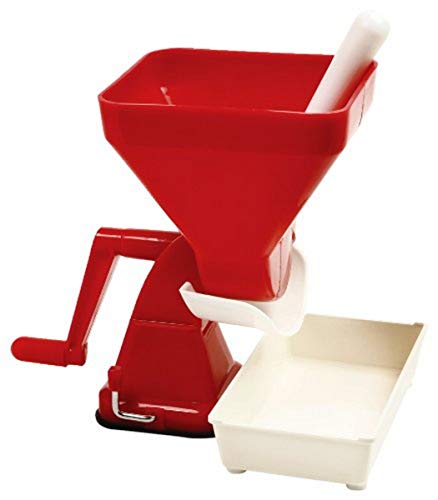
- 2.25-quart hopper
- Stainless steel mesh
- Secure suction base
Best For: Gardeners and home canners processing larger batches
Best Italian-Made Pick

- Separates skins and seeds from pulp
- Stainless steel construction
- Made in Italy
Best For: Compact manual sauce and purée preparation
Best Electric Batch Option

- 250-watt motor with two speeds
- One-gallon hopper
- Three stainless steel screens
Best For: Large-batch sauces, preserving, and salsa
Best Compact Manual Value

- No electricity required
- Separates peels from pulp
- Compact and multipurpose design
Best For: Small kitchens and manual fruit or vegetable processing
Quiet Kitchen Helper

- Stainless steel filter
- Separates seeds and skin
- Quiet, electricity-free operation
Best For: Home cooks and gardeners processing tomatoes and other produce
Effortless Sauce Maker
- Stainless steel juicing filter
- Separates peel and seeds
- Large feed inlet for batch prep
Best For: Sauces, purees, soups, and household batch processing
Adjustable Prep Station

- Adjustable design
- Machine-washable care instructions
- Large produce feed inlet
Best For: Home cooks wanting flexible, easy-care manual juicing
Best Suction-Mount Pick – Easy Tomato Strainer
If you want one of the more straightforward tomato presses under 100, this manual strainer focuses on separating skins and seeds while producing juice or puree. Its suction base is designed to keep the mill steady during use.
Best For: Home cooks making tomato juice, puree, salsa, or pasta sauce in smaller batches.
Pros:
- Separates skins and seeds from the juice.
- Sturdy suction mount helps stabilize the food mill.
- Includes a stainless steel pusher.
- Can also be used for potato puree and other straining tasks.
Cons:
- Plastic construction may be less substantial than an all-metal press.
- The supplied dimensions and manual design suggest a more compact, hands-on workflow rather than high-volume processing.
This is a practical choice for gardeners and everyday cooks who value simple operation, versatile straining, and a secure countertop setup.
Best Stainless-Steel Filter Value – Durable Tomato Sauce Maker
Among tomato presses under 100, this model stands out for its stainless steel filter and large feed inlet. It is built to separate peel and seeds from pulp while accommodating a range of fruits and vegetables.
Best For: DIY cooks who want a durable manual press for smooth sauces, juices, and salsas.
Pros:
- Stainless steel filter is designed for durability.
- Separates peels and seeds for smoother juice and puree.
- Large feed inlet can reduce the need for frequent refilling.
- PP shell is intended to resist wear during repeated use.
Cons:
- The product notes do not specify a suction base or other countertop-stabilizing feature.
- Its broad fruit-and-vegetable compatibility may be more than needed for shoppers seeking a tomato-only tool.
With its stainless filter, roomy inlet, and uncomplicated construction, this press is a sensible option when durability and efficient loading matter more than extra features.
Best Easy-Clean Option – Large-Capacity Hidyliu Press
This Hidyliu model is a strong contender among tomato presses under 100 for shoppers prioritizing capacity and cleanup. It combines a stainless steel filter with an oversized inlet and dishwasher-safe care instructions.
Best For: Home preservers processing larger amounts of tomatoes or other produce for sauces and juices.
Pros:
- Large feed inlet supports bigger batches with fewer refills.
- Stainless steel filter separates peel and seeds.
- Components are designed to disassemble for cleaning.
- Dishwasher-safe care instructions add convenience.
Cons:
- The included-components field is listed as “no,” despite the description mentioning multiple parts, so buyers should verify the package contents.
- Its larger footprint may require more storage space.
The adjustable design and high-capacity format make this a useful pick for batch cooking, especially if easy washing is a priority.
Best for Large Batches – Norpro Jumbo Tomato Strainer
For shoppers comparing tomato presses under 100 for canning preparation, the Norpro Manual Jumbo Tomato Strainer offers a notably roomy hopper and receiving tray. Its stainless steel mesh is designed to separate seeds, skins, and stems while processing tomatoes or cooked apples.
Best For: Gardeners and home canners preparing larger batches of sauce, puree, paste, juice, or applesauce.
Pros:
- 2.25-quart hopper supports larger batches.
- Stainless steel mesh automatically separates seeds, skins, and stems.
- Suction base helps secure it to smooth countertops.
- Includes a receiving tray, pestle, instructions, and starter recipes.
Cons:
- Its jumbo size may be excessive for occasional or small-batch users.
- The listed dimensions indicate that it needs substantial storage space.
- Manual cranking requires hands-on effort.
The Norpro is the most batch-oriented choice here, pairing a large hopper with a secure base and versatile tomato-and-apple processing capability.
Best Italian-Made Pick – HOME Pachino Tomato Press
For shoppers comparing tomato presses under 100, the HOME Pachino is a straightforward manual option for making sauces and tomato purées. Its stainless steel construction and separator are designed to remove tomato skins and seeds from the pulp, while the plastic-coated handle provides a more comfortable grip.
Best For: Home cooks who want a compact, manually operated press for sauces and purées.
Pros:
- Separates skins and seeds from tomato pulp.
- Suitable for sauces and tomato purées.
- Stainless steel construction and handle.
- Made in Italy.
Cons:
- Manual operation requires hands-on effort.
- Limited supplied dimensions may not suit large-batch processing.
The HOME Pachino is a sensible choice when simplicity, stainless steel construction, and compact food preparation matter more than electric speed or high-volume capacity.
Best Electric Batch Option – Weston Deluxe Tomato Strainer
Among tomato presses under 100, the Weston Deluxe stands out for cooks processing larger quantities. Its 250-watt motor, two-speed operation, one-gallon hopper, and included screens support sauces, purées, jellies, salsa, and other soft fruits and vegetables.
Best For: Garden harvests, preserving, and larger batches of sauces or salsa.
Pros:
- 250-watt motor with forward and reverse speeds.
- One-gallon hopper for larger batches.
- Includes 1.5mm, 3mm, and 6mm stainless steel screens.
- Stomper is included for feeding food safely.
Cons:
- Requires access to a 120-volt AC power source.
- Larger footprint than a compact manual press.
- Electric components add complexity compared with hand-crank models.
The Weston is the most capable choice here for frequent or high-volume processing, especially when interchangeable screens and reverse operation are useful for different recipes.
Best Compact Manual Value – Tbest Manual Tomato Press
For shoppers seeking tomato presses under 100 without electricity, the Tbest manual tomato press offers a compact, hand-crank design. Its aluminum alloy and ABS construction is intended to separate peels from pulp, while its multipurpose design can handle tomatoes and other fruits or vegetables.
Best For: Space-conscious cooks who prefer manual, energy-free sauce and juice preparation.
Pros:
- Manual crank works without electricity.
- Separates peels from pulp for smoother juices and sauces.
- Suitable for tomatoes, ginger, fruits, and vegetables.
- Compact design supports easier storage.
Cons:
- Manual operation may require more effort for larger batches.
- No included components are specified.
- Aluminum alloy and ABS construction may feel less substantial than all-stainless designs.
The Tbest is a practical fit for smaller kitchens and users who value portability and energy-free operation. Its versatility makes it useful beyond tomato processing, though it is better suited to modest quantities than heavy-duty batches.
Quiet Kitchen Helper – Hand Crank Tomato Press
Tomato Strainer, Hand Crank Tomato Press Grinder Tomato Sauce Maker Machine Food Mill
Check Price On AmazonIf you are comparing tomato presses under 100, this hand-crank model is a practical choice for turning tomatoes and other produce into juice, sauce, or paste. Its stainless steel filter separates seeds, skin, and pulp without requiring electricity.
Best For: Home cooks and gardeners who want a quiet, manual press for tomatoes, citrus, and other fruits or vegetables.
Pros:
- Stainless steel filter supports efficient juicing.
- Separates seeds, skin, and pulp for smoother juice or sauce.
- Manual operation is quiet and does not require electricity.
- Large feed inlet and table-mounting bracket support convenient batch processing.
Cons:
- Manual operation requires hand cranking.
- The PP shell may be less robust than an all-metal construction.
This model combines a simple structure with a high-yield design and easy washing. It is a sensible option when quiet operation and basic versatility matter more than powered convenience.
Effortless Sauce Maker – GOWENIC Manual Tomato Press
Among tomato presses under 100, the GOWENIC manual tomato press is designed for straightforward sauce preparation with minimal effort. Its stainless steel filter and separation system produce smooth pulp while leaving peel and seeds behind.
Best For: Cooks preparing sauces, purees, soups, or larger batches of processed fruit and vegetables.
Pros:
- Stainless steel filter is designed for efficient juicing.
- Separates peel and seeds from pulp for a smoother texture.
- Simple disassembly supports easier cleaning.
- Large feed inlet can reduce preparation time when processing multiple ingredients.
Cons:
- Manual pressing still requires physical effort.
- The supplied details do not list included components.
With a durable PP shell, manual operation, and a generous feed opening, this press focuses on efficient everyday use. It is particularly appealing for cooks who value smooth results and uncomplicated cleanup.
Adjustable Prep Station – Manual Tomato Juicer
This adjustable manual juicer is another practical contender among tomato presses under 100. It uses a stainless steel filter to separate peel and seeds from pulp, while its large inlet helps accommodate more fruit or vegetables at once.
Best For: Home kitchens seeking a compact manual tool with adjustable functionality and machine-washable care instructions.
Pros:
- Stainless steel filter makes tomato juicing easier.
- Separates peel and seeds from the pulp.
- Large feed inlet supports processing more produce per load.
- Listed as adjustable and suitable for machine washing.
Cons:
- Manual use requires hand operation.
- The PP shell is not an all-stainless-steel build.
Its straightforward design emphasizes efficient juicing, convenient cleaning, and durability for routine kitchen use. The adjustable feature and machine-washable care instructions give it a little more flexibility than a basic fixed-use press.
How We Picked the Best Tomato Presses Under 100
We focused on the features that matter most for dependable home sauce making: separation of seeds and skins, hopper and output capacity, material quality, ease of turning or powering the unit, and cleanup. The selection includes manual presses for users who want simple operation and electric designs for larger batches. We also considered whether each style suits occasional cooking, garden harvests, salsa preparation, or frequent food preservation.
Price matters, but the least expensive option is not always the best value. A sturdy press with a reliable screen and easy-to-clean parts may save time and frustration over repeated use.
Quick Comparison
| Best For | Recommended Style | What to Look For |
|---|---|---|
| Occasional sauce making | Compact manual press | Easy assembly and storage |
| Large garden harvests | High-capacity or electric press | Stable base, fast throughput, durable parts |
| Small kitchens | Hand-crank model | Compact footprint and simple cleanup |
| Frequent preserving | Stainless steel or reinforced construction | Replaceable screens and strong connections |
Key Buying Factors for Tomato Presses Under $100
Manual or Electric Operation
Manual presses are usually more affordable, quieter, and easier to store. They work well for small or medium batches, although turning the crank takes effort. Electric models can process tomatoes faster and reduce hand fatigue, making them more practical for preserving several quarts or bushels.
Screen and Separation Performance
Look for a stainless steel or otherwise durable screen that separates seeds and skins cleanly. A well-designed screen should produce smooth pulp without requiring excessive reprocessing. Check whether replacement screens or extra attachments are available if you plan to process other soft fruits.
Capacity and Stability
A larger hopper reduces refilling, while a stable clamp, suction base, or wide footprint helps keep the press secure. High-capacity designs are useful for garden harvests, but they may take up more cabinet space.
Cleaning and Construction
Removable components make cleanup significantly easier. Stainless steel and sturdy metal parts generally withstand repeated use, while lightweight plastic can be convenient but may require gentler handling. Confirm which parts are dishwasher safe and dry screens promptly to help prevent staining or corrosion.
Who Should Buy Which Tomato Presses Under 100?
Choose a compact manual tomato press if you make sauce only occasionally or have limited storage. It offers the simplest setup and typically the lowest cost. A heavy-duty hand-crank model is better for cooks who want more capacity and control without relying on electricity.
Choose an electric tomato strainer if speed and reduced effort are priorities, especially when processing large harvests. If you make salsa, fruit purée, or preserves as well as tomato sauce, prioritize a versatile screen system and durable construction. Before buying, measure your counter and storage space, then confirm that the press can handle the batch sizes you normally prepare.