Choosing the right grain mill for wheat can make a big difference in flour texture, freshness, and everyday convenience. The best option depends on how much you grind, how fine you want the flour, and whether you prefer manual, mixer-driven, or electric power.
Below, we’ve narrowed the field to 10 practical picks for home bakers and heavier-duty users, with a focus on build quality, capacity, and real-world usability.
Best 10 Grain Mill for Wheat Picks for 2026
Stand Mixer Grain Mill
KitchenAid KGM All Metal Grain Mill

- Fits all household KitchenAid mixers
- 12 grind levels from coarse to fine
- Works with wheat, corn, rice, and other dry grains
Best For: KitchenAid owners milling wheat at home
Heavy-Duty Manual Mill
White Hand Crank Grain Grinder

- Manual crank design uses no electricity
- Adjustable for fine or coarse grinding
- Built for wheat and other dry grains
Best For: Home, camping, or survival milling
Fine-Control Attachment

- 9 settings from ultra-fine to coarse
- Made for dry grains like wheat and oats
- Removable design with cleaning tool included
Best For: KitchenAid users wanting precise flour texture
High-Speed Electric Grinder
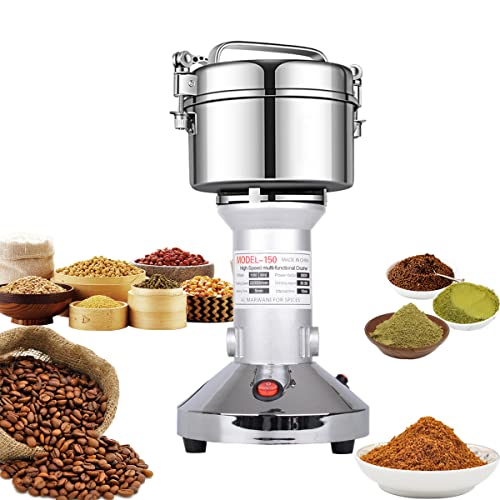
- 900W electric motor for fast grinding
- Works with wheat and other dry grains
- Food-grade stainless steel with overload protection
Best For: Small-batch dry grinding
Mixer Attachment Mill
Grain Mill Attachment for Wheat and More

- All-metal build for durability
- 12 grind levels for texture control
- Works with KitchenAid stand mixers
Best For: KitchenAid owners grinding wheat at home
Best for Everyday Use
High-Speed Grain Mill for Wheat

- 2000W motor with superfine output
- 550g stainless steel chamber
- Safety shutoff and overload protection
Best For: Fast grinding of dry wheat and other grains
Manual Burr Mill
Hand Crank Grain Mill for Wheat Flour
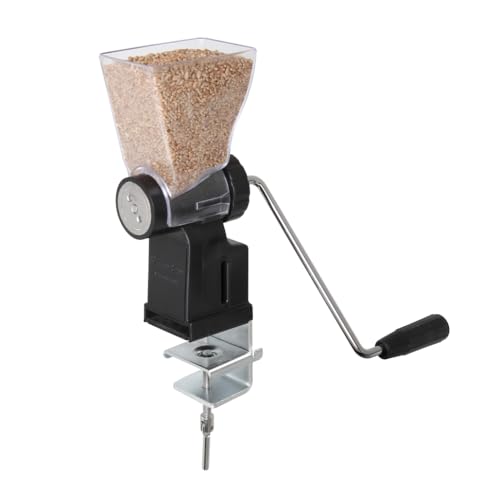
- Stainless steel burrs with adjustable grind
- Hand crank with optional electric drive
- Compact design with countertop clamp
Best For: Small-batch wheat milling with manual control
Heavy-Duty Swing Mill
VEVOR 1000g Commercial Electric Grinder

- 3000W motor with 28,000 r/min speed
- Swing body helps pouring and can improve uniformity
- Stainless steel build with lid-stop and overload protection
Best For: Dry wheat grinding when you need high-speed commercial-style power
Large-Capacity Flour Mill
2000g Stainless Steel Grain Mill Grinder

- 2 kg capacity for bigger dry-grind batches
- 32000r/min motor with adjustable timer
- 304 stainless steel with lid-lock and overload protection
Best For: Bigger wheat-flour batches in a dry-ingredient grinder
Compact High-Speed Pulverizer
750g Stainless Steel Grain Mill Grinder
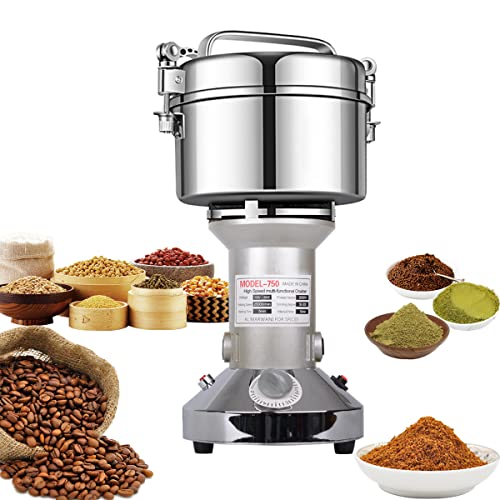
- 750g capacity for smaller dry batches
- 2000W motor with 25,000 r/min speed
- Triple blades with auto shutoff and reset
Best For: Smaller wheat-grinding jobs where speed and compact size matter
Stand Mixer Grain Mill – KitchenAid KGM All Metal Grain Mill
If you already own a KitchenAid stand mixer, this grain mill for wheat turns that appliance into a practical flour-making tool. It’s built for low-moisture grains like wheat, corn, and rice, and the 12 grind settings let you move from coarse meal to finer flour with control.
Best For: KitchenAid owners who want an attachment for milling wheat and other dry grains at home.
Pros:
- Fits all household KitchenAid stand mixers
- 12 grind levels for coarse-to-fine milling
- Handles low-moisture grains like wheat, corn, and rice
- Includes a cleaning brush
Cons:
- Only for low-moisture, low-oil grains
- Requires a compatible KitchenAid stand mixer
For a mixer attachment, this is a straightforward way to make fresh grain flour without adding a separate countertop appliance. Its all-metal build and simple cleanup make it a solid fit for everyday home milling.
Heavy-Duty Manual Mill – White Hand Crank Grain Grinder
This grain mill for wheat is a manual hand-crank option for people who want fresh flour without electricity. It’s designed for dry ingredients and can handle wheat, corn, oats, rice, coffee beans, and other grains, with adjustable grinding so you can dial in the texture you want.
Best For: Users who want a heavy-duty manual grinder for home, camping, or backup use.
Pros:
- Manual hand-crank operation needs no electricity
- Works with wheat, corn, oats, rice, and more
- Adjustable grinding degree for different textures
- Large hopper and included handle for easier use
Cons:
- Dry raw materials only
- Large and heavy compared with compact electric models
If you value independence from power and want a sturdy mill for routine or emergency use, this model stands out. Its size and manual operation make it more of a serious utility grinder than a lightweight kitchen gadget.
Fine-Control Attachment – HOZODO All Metal Grain Mill
If you want a grain mill for wheat that gives you more control over texture, this KitchenAid attachment is built for dry grains and offers 9 precise settings. It’s meant for low-moisture grains like wheat, oats, corn, and millet, and the removable design makes cleanup simple with the included tool.
Best For: KitchenAid users who want adjustable grinding and easy maintenance.
Pros:
- 9 grind settings from ultra-fine to coarse
- Compatible with dry grains like wheat, oats, and corn
- Die-cast aluminum alloy construction
- Removable design with included cleaning tool
Cons:
- Not for high-oil ingredients like nuts or sesame
- Needs cooling breaks during extended use
This is a strong pick if you want a more adjustable attachment than a basic mill and prefer a cleaner workflow after grinding. It’s especially appealing for baking-focused users who want to tailor flour texture from batch to batch.
High-Speed Electric Grinder – 150g Stainless Steel Mill
For shoppers who want a compact electric grain mill for wheat, this high-speed grinder is built for quick dry grinding of grains, herbs, spices, and more. It uses a stainless steel body, triple blades, and a small 150g capacity, so it’s aimed at fast batch grinding rather than large-volume milling.
Best For: Users who want a fast electric grinder for small dry-batch milling.
Pros:
- 900W motor with very high speed grinding
- Handles wheat, corn, rice, and other dry grains
- Food-grade stainless steel construction
- Automatic overload protection
Cons:
- Small 150g capacity
- Short run time with required cooling breaks
- Not for wet, oily, or sticky ingredients
This grinder is best viewed as a fast, compact tool for small amounts of flour or powder. If you only need occasional dry grinding and want speed over capacity, it fits that role well.
Mixer Attachment Mill – Grain Mill Attachment for Wheat and More
If you want a grain mill for wheat that uses the power you already have in a KitchenAid stand mixer, this all-metal attachment is built for efficient home grinding. It handles wheat along with corn, oats, buckwheat, millet, barley, and other non-oily grains, and the 12-level adjustment lets you move from coarse cracks to finer flour.
Best For: Home bakers with a KitchenAid mixer who want a sturdy attachment for small-batch wheat flour grinding.
Pros:
- All-metal die-cast construction for durability
- 12 grind levels for more control over texture
- Fits KitchenAid stand mixer motors for powered grinding
- Brush included for simple cleaning between grain types
Cons:
- Stand mixer is required; the grain mill grinder is sold separately
- Not intended for wet or oily grains
- Dishwasher cleaning is not recommended
This is a practical pick if you want a compact, mixer-driven grain mill for wheat and similar dry cereals. The main advantage is convenience: once attached, it offers adjustable grinding without needing a separate countertop machine.
Best for Everyday Use – High-Speed Grain Mill for Wheat
For shoppers who need a grain mill for wheat that can also handle other dry ingredients, this 2000W electric grinder is built for fast pulverizing. It uses a high-speed blade system to turn dry grains, spices, and coffee beans into superfine powder, with a 550g capacity and safety features like lid detection and overload protection.
Best For: Users who want a powerful electric grinder for fast batches of dry wheat and other ingredients.
Pros:
- 2000W motor and 28,000 r/min speed for quick grinding
- Food-grade stainless steel construction
- Automatic stop when the lid opens plus overload protection
- 550g capacity with included sieve and brush
Cons:
- Designed only for dry materials, not wet, fresh, oily, or sticky foods
- Needs rest breaks after every 5 minutes of use
- Requires careful loading so materials do not exceed 2/3 of the jar
This grinder is best when speed matters more than manual control. If you need a commercial-style machine for dry wheat, it offers strong output, but the short run time and material limits make it better for prepared batches than continuous milling.
Manual Burr Mill – Hand Crank Grain Mill for Wheat Flour
Kitchen Crop Hand Crank Grain Mill Wheat Flour Grinder, Stainless Steel Metal Burrs (The Grain Mill)
Check Price On AmazonIf you prefer a hand-crank grain mill for wheat, this stainless steel burr model is aimed at small-batch home grinding. It can process wheat, rice, oats, barley, rye, corn, beans, peppercorns, and other non-oily grains, and the adjustable dial lets you choose anything from cracked grain to finer flour.
Best For: Home users who want a compact manual mill for dry wheat and other grains.
Pros:
- Stainless steel burrs for grinding dry non-oily grains
- Adjustable texture from coarse to bread-quality flour
- Hand crank included, with optional electric drive compatibility
- Compact body and secure countertop clamp for small spaces
Cons:
- Small two-cup hopper limits batch size
- Manual cranking may be slower than electric options
- Only suitable for dry, non-oily grains and seeds
This model makes sense if you want a simple, space-saving wheat mill with more control and less reliance on power. Its clamp mount and flexible drive options add convenience, but it is still best suited to modest home batches.
Heavy-Duty Swing Mill – VEVOR 1000g Commercial Electric Grinder
If you want a grain mill for wheat that leans more toward speed and batch grinding than countertop baking, this VEVOR unit is built for dry ingredients and fast pulverizing. Its 3000W motor, swing-style body, and stainless-steel chamber make it a practical pick for users who need fine powder from wheat, corn, oats, and similar dry materials.
Best For: Dry-grain grinding at higher volume, especially when you want a swing-style commercial grinder for wheat and other hard ingredients.
Pros:
- 3000W motor and 28,000 r/min speed for fast grinding.
- Swing design helps pour more easily and can improve grinding consistency.
- Food-grade stainless steel with lid-open stop and overload protection.
- Handles wheat, corn, barley, oats, rye, coffee beans, and dry spices.
Cons:
- Designed only for dry materials, not wet, oily, or sticky ingredients.
- Requires short run times with rest periods between batches.
- Best results may require sieving and regrinding coarser particles.
This is a strong fit for buyers who value raw grinding power and safety features over a quiet, small-batch appliance. For wheat in particular, it is better suited to fast powdering than traditional milling.
Large-Capacity Flour Mill – 2000g Stainless Steel Grain Mill Grinder
For shoppers comparing a grain mill for wheat in a larger home-or-light-commercial format, this 2000g grinder is built to process dry grains quickly. The stainless-steel chamber, 32000r/min motor, and adjustable timer make it a straightforward choice for turning wheat, corn, and rice into fine powder.
Best For: Users who want a larger-capacity dry grain grinder for wheat flour and other everyday pantry staples.
Pros:
- Large 2 kg capacity supports bigger batches.
- Food-grade 304 stainless steel resists corrosion.
- 32000r/min motor and adjustable timer for fast, flexible grinding.
- Includes lid-lock and overload protection for safer operation.
Cons:
- Only for dry ingredients; not suitable for oily or wet foods.
- Needs rest time between batches to avoid overheating.
- Performance depends on proper loading and routine maintenance.
This model stands out if capacity matters more than compact size. It offers a strong balance of speed, safety, and batch size for anyone grinding wheat regularly.
Compact High-Speed Pulverizer – 750g Stainless Steel Grain Mill Grinder
If you need a grain mill for wheat that stays relatively compact while still grinding fast, this 750g stainless-steel model is aimed at dry ingredients only. It uses a 2000W motor and triple-blade setup to pulverize grains like wheat, corn, rice, and coffee in short bursts.
Best For: Home users who want a smaller, fast dry grinder for wheat, spices, and other pantry staples.
Pros:
- Compact 750g capacity is easier to manage for smaller batches.
- 2000W motor and 25,000 r/min speed grind quickly.
- Triple-blade design targets fine powder output.
- Auto shutoff and reset button add an extra safety layer.
Cons:
- Dry raw materials only; cannot handle wet or oily ingredients.
- Recommended run time is short, with rest periods between cycles.
- Needs careful loading to keep materials below the chamber limit.
This is a practical pick when you want speed in a smaller footprint. It is best thought of as a quick dry pulverizer for wheat rather than a traditional low-speed flour mill.
How We Picked the Best Grain Mill for Wheat
We focused on mills that are relevant for wheat grinding first, then compared construction, grinding method, output size, and ease of use. Because a Grain Mill for Wheat can be used very differently by a casual baker versus someone making flour in bulk, we prioritized models that cover a range of needs without drifting into specialty-only territory.
We also looked for clear product differences: manual versus electric, stand mixer attachments versus standalone machines, and smaller home-use options versus higher-capacity grinders. That makes it easier to match the mill to your kitchen and workflow.
Quick Comparison: Which Type Works Best?
Stand mixer attachments are a smart fit if you already own a compatible KitchenAid and want an affordable way to mill wheat without buying a separate appliance. Manual mills are best when you value control, low-tech reliability, and occasional use. Electric grinders are the strongest choice for speed, volume, and convenience, especially if you plan to process wheat regularly or in larger batches.
Key Buying Factors for Grain Mill for Wheat
Grinding Method and Fine-Ness
Some mills are designed for a coarser meal, while others can produce finer flour. If you bake bread often, look for a mill that can handle wheat consistently and let you adjust grind level when needed.
Capacity and Batch Size
Smaller hoppers are fine for occasional baking, but larger capacity matters if you grind several cups at a time. A bigger electric model can save time, while a hand-crank mill may be better for smaller batches.
Power Source and Convenience
Manual mills require effort but are simple and portable. Electric mills are faster and less labor-intensive. Attachments save counter space, but they depend on your stand mixer and may be slower than dedicated mills.
Materials and Durability
For wheat, metal burrs and all-metal construction are usually preferred because they tend to hold up better under regular use. Durable parts can also help maintain more consistent performance over time.
Heat, Noise, and Cleanup
Fast electric grinding can generate more heat and noise, which may matter if you mill often. Also consider whether the unit disassembles easily for cleaning, especially if you plan to switch between wheat and other dry grains.
Who Should Buy Which Grain Mill for Wheat?
If you want the simplest upgrade for home baking, a KitchenAid attachment is often the easiest route. If you only mill occasionally or want backup capability during power outages, a manual mill makes sense. If speed and quantity matter most, choose an electric grinder with enough capacity for your routine.
For most buyers, the best Grain Mill for Wheat is the one that matches your baking habits, available storage, and preferred level of effort. Start with how often you’ll grind, then narrow by power type, capacity, and build quality.