Freshly milled grain can improve flavor, control texture, and reduce reliance on store-bought flour. The best manual grain mills also give you a dependable way to grind during outages or off-grid living.
Below, we’ve rounded up 10 hand-crank options for everything from fine flour to coarser meal, with a focus on build quality, adjustability, and real-world usability.
Best 10 Manual Grain Mills Picks for 2026
Best Heavy-Duty Cast Iron Pick
Victoria Cast Iron Mill - High Hopper

- Cast iron build with double tin plating
- Adjustable screw changes grind coarseness
- Clamps to most tables 1/2"–2" thick
Best For: Durable home grinding with a high hopper
Most Versatile Manual Mill
Wondermill Junior Deluxe Hand Mill

- Stone and stainless steel burr sets
- Handles dry, wet, oily, and high-moisture foods
- Double clamp mount for table or counter
Best For: Versatile grinding, from flour to nut butter
Best Compact Cast-Iron Option
Victoria Cast Iron Mill - Low Hopper

- Same cast-iron build and adjustable screw
- Lower hopper and smaller footprint
- Clamps to most tables 1/2"–2" thick
Best For: Compact, sturdy grinding with a lower hopper
Premium USA-Made Pick
Country Living Hand Grain Mill

- Made entirely in the USA
- Adjusts from cracked grain to cake flour
- Double sealed ball bearings with lifetime warranty
Best For: Long-term use with precise grind control
Classic Cast-Iron Pick

- Cast-iron body with food-safe tin plating
- Adjustable grind from coarse to fine
- Clamp-mounted kit includes key hardware
Best For: Home cooks milling dry grains, coffee, and spices on the countertop.
High-Capacity Heavyweight
Lehman's Manual Power Grain Mill

- 6-cup hopper for larger dry-grain batches
- Grinds wheat, corn, rye, rice, quinoa, and small beans
- 12-inch flywheel helps add grinding momentum
Best For: Users who want a large, dry-grain mill for bigger batches and pastry flour.
Extra-Large Hopper Choice
Corona Manual Grain Mill High Hopper

- 1.9-quart hopper offers extra capacity
- Cast iron body with tin plating for durability
- Adjustable grind for grains, coffee, spices, and peppers
Best For: Shoppers who want a bigger hopper and versatile manual grinding.
Lightweight countertop grinder
Kitchen Crop Hand Crank Grain Mill
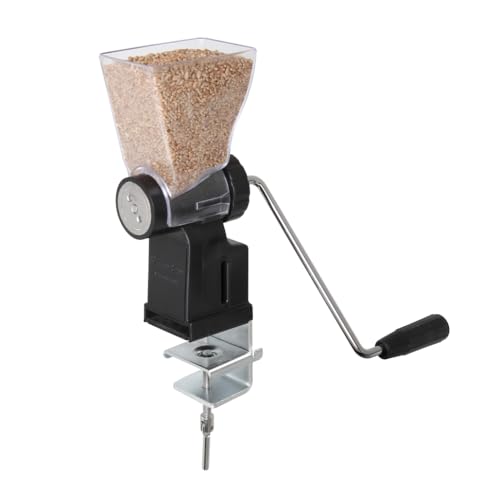
- Grinds many dry, non-oily grains and seeds
- Adjustable from cracked grain to fine flour
- Less than 3 lb with secure countertop clamp
Best For: Small-batch home milling and easy storage
Traditional masa grinder
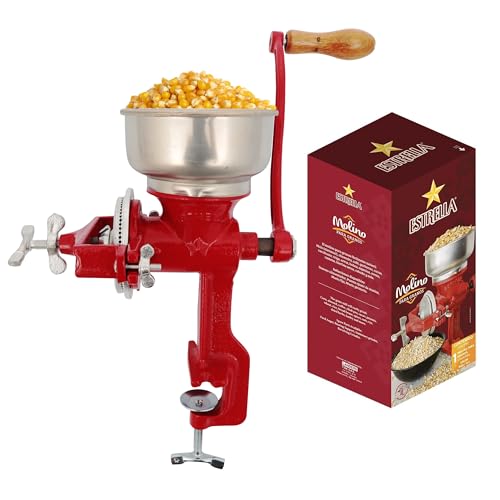
- Cast iron hand grinder for traditional corn use
- Works with corn, nixtamal, chickpeas, wheat, and more
- Clamps to counters up to 1.5 inches thick
Best For: Traditional masa and corn-based cooking
Flywheel grinder for bigger batches

- Flywheel design supports steady grinding without electricity
- Three settings: coarse, medium, and fine
- 2-liter hopper and durable carbon steel body
Best For: Frequent milling and larger home batches
Best Heavy-Duty Cast Iron Pick – Victoria Cast Iron Mill – High Hopper
If you want manual grain mills built for heavy use, this Victoria cast iron model is a straightforward pick for home grinding tasks. The adjustable screw lets you change coarseness, while the cast-iron crank and white iron discs are designed for grinding grain, corn, coffee, seeds, nuts, and more.
Best For: Home users who want a durable cast-iron mill with a high hopper and broad ingredient versatility.
Pros:
- Heavy-duty cast iron construction with double tin plating
- Adjustable screw for coarser or finer milling
- Clamps to most tables 1/2"–2" thick
- Works with grains, corn, coffee, seeds, nuts, spices, and more
Cons:
- Cannot grind to a superfine texture
- Will not grind whole wheat into a fine powder
For buyers who value a traditional hand grinder over ultra-fine output, this mill focuses on rugged construction and practical everyday use. The high hopper and non-slip protector add convenience during longer grinding sessions.
Most Versatile Manual Mill – Wondermill Junior Deluxe Hand Mill
Among manual grain mills, the Wondermill Junior Deluxe stands out for speed and versatility. It is designed to grind dry, hard, soft, wet, and oily ingredients, and it includes both stone and stainless steel burr sets for different foods and textures.
Best For: Buyers who want a highly versatile hand mill for flour, nut butter, oily foods, and specialty grinding.
Pros:
- Claims 1.25 cups of flour per minute
- Includes stone burrs and stainless steel burrs
- Handles dry, wet, oily, and high-moisture foods
- Double clamp mount secures to a table or counter
Cons:
- Heavier than some other hand mills at 14 pounds
- Higher price positioning than basic manual grinders, based on product positioning
This model is a strong fit if you need one hand-crank grinder for more than just wheat. Its locking adjustment knob and specialty auger make it especially useful for users who want fine control and broader ingredient options.
Best Compact Cast-Iron Option – Victoria Cast Iron Mill – Low Hopper
This Victoria option is another practical choice in manual grain mills, but with a lower hopper and a smaller footprint than the high-hopper version. It keeps the same cast-iron build and adjustable milling setup for grinding grain, coffee, seeds, nuts, and other kitchen staples.
Best For: Users who want a sturdy cast-iron hand grinder with a lower profile and slightly smaller size.
Pros:
- Heavy-duty cast iron construction with double tin plating
- Adjustable screw for changing grind coarseness
- Clamps onto tables 1/2"–2" thick
- Can handle grains, coffee, seeds, nuts, spices, and more
Cons:
- Cannot grind to a superfine texture
- Will not grind whole wheat into a fine powder
If you want the same rugged approach as the larger Victoria mill but prefer a lower hopper and smaller dimensions, this version is easier to fit into tighter spaces. It still stays focused on reliable manual grinding rather than ultra-fine flour production.
Premium USA-Made Pick – Country Living Hand Grain Mill
If you are comparing manual grain mills for long-term use, the Country Living Hand Grain Mill emphasizes durability and control. It uses solid cast aircraft aluminum, industrial-grade ball bearings, and an adjustable range from cracked grain to cake flour.
Best For: Buyers who want a USA-made hand mill with a lifetime warranty and fine grind adjustment.
Pros:
- Made entirely in the USA
- Solid cast aircraft aluminum construction
- Adjustable from cracked grain to cake flour
- Includes double sealed industrial grade ball bearings and lifetime warranty
Cons:
- Heavier than many hand mills at 16 pounds
- Capacity is listed at 2 pounds, which may be limiting for larger batches
This is a strong pick for buyers prioritizing build quality, origin, and long service life. The materials and warranty make it appealing if you want a manual mill that feels closer to a serious kitchen tool than a casual backup.
Classic Cast-Iron Pick – Corona Manual Grain Mill
If you want manual grain mills that feel traditional and dependable, this Corona cast-iron grinder is a straightforward choice. It handles corn, wheat, rice, coffee, spices, and dried peppers, and the adjustable plates let you move from coarse cracked grain to finer flour for masa, tortillas, and similar recipes.
Best For: Home cooks who want a compact, countertop-clamped mill for corn, wheat, rice, coffee, and other dry ingredients.
Pros:
- Heavy-duty cast iron body with food-safe tin plating for durability
- Adjustable grind settings for coarse to fine textures
- Includes hopper, grinding plates, clamp, handle, mounting hardware, and stabilizing pad
- Countertop clamp fits surfaces up to 1.45 inches thick
Cons:
- Manual operation requires physical effort
- Best suited to dry ingredients only
This is a practical pick if you value a simple, time-tested hand grain mill with sturdy materials and broad everyday kitchen use.
High-Capacity Heavyweight – Lehman's Manual Power Grain Mill
Among manual grain mills, this Lehman’s model stands out for capacity and momentum. It grinds free-flowing dry grains like wheat, corn, rye, rice, quinoa, and small beans to pastry flour, and the large hopper plus 12-inch flywheel are designed to make hand grinding easier.
Best For: Buyers who want a larger-capacity hand mill for dry grains and pastry-flour results.
Pros:
- Grinds any free-flowing, dry grain to pastry flour
- Extra-large 6-cup hopper supports bigger batches
- 12-inch flywheel adds momentum for easier hand grinding
- Can also be motorized, according to the product notes
Cons:
- Heavier than compact countertop mills at 26 pounds
- Requires a stable setup with four pre-drilled base holes for bolting
If you want a sturdier, higher-capacity manual mill and don’t mind a larger footprint, this is the most production-oriented option in the group.
Extra-Large Hopper Choice – Corona Manual Grain Mill High Hopper
If you’re comparing manual grain mills and want more hopper room, this Corona version offers a larger 1.9-quart capacity while keeping the same cast-iron, hand-crank approach. It is built for grinding corn, wheat, rice, soybeans, chickpeas, coffee, spices, and dried peppers, with adjustable settings for coarse or fine results.
Best For: Buyers who want a manual grinder with a larger hopper and broad ingredient versatility.
Pros:
- Large 1.9-quart hopper for more ingredient capacity
- Cast-iron construction with food-safe tin plating
- Adjustable grind settings for a range of textures
- Includes hopper, grinding plates, clamp, handle, mounting hardware, and rubber pad
Cons:
- Manual grinding takes more effort than electric alternatives
- Needs a countertop up to 1.45 inches thick for clamping
This model makes sense if hopper size matters most and you want a sturdy, traditional mill for repeated kitchen use.
Lightweight countertop grinder – Kitchen Crop Hand Crank Grain Mill
Kitchen Crop Hand Crank Grain Mill Wheat Flour Grinder, Stainless Steel Metal Burrs (The Grain Mill)
Check Price On AmazonIf you want manual grain mills for small-batch kitchen use, this Kitchen Crop hand crank grinder is built for dry, non-oily ingredients and straightforward countertop grinding. Its stainless steel burrs handle a wide range of grains and seeds, while the adjustment dial lets you move from cracked grains to finer flour without extra equipment.
Best For: Home cooks who want a lightweight hand mill for occasional flour grinding and mixed dry grains.
Pros:
- Stainless steel burrs grind wheat, rice, oats, barley, rye, corn, beans, peppercorns, and more non-oily ingredients.
- Adjustable dial supports coarse, cracked texture or finer bread-style flour.
- Compact design weighs less than 3 pounds and is easy to store or move.
- Clamp base secures to counters or tables up to 2 inches thick.
Cons:
- Best suited to dry, non-oily grains and seeds only.
- Two-cup hopper is geared toward small batches rather than high-volume milling.
- Optional electric motor is sold separately.
For buyers who value portability and simple manual control, this mill covers the basics well. The build, warranty, and multi-grain compatibility make it a practical pick for routine home grinding.
Traditional masa grinder – Estrella Manual Grain Mill
Among manual grain mills, this Estrella molino leans into traditional corn grinding for Mexican and Latin American cooking. The cast iron body is made for durable hand-crank use, and the adjustable settings give you flexibility when preparing corn, nixtamal, chickpeas, wheat, rice, coffee beans, spices, and soybeans.
Best For: Cooks making masa, tortillas, tamales, and other traditional recipes with a sturdy hand grinder.
Pros:
- Traditional hand-crank design is aimed at masa, tortillas, tamales, atole, pupusas, and arepas.
- Heavy-duty cast iron construction supports long-term use.
- Adjustable grinding settings add flexibility for coarse ingredients.
- Clamps to countertops up to 1.5 inches thick and has removable parts for cleaning.
Cons:
- Best aligned to traditional coarse grinding tasks rather than ultra-fine flour.
- Heavier cast iron build is less portable than lighter mills.
- Countertop clamp is limited to surfaces up to 1.5 inches thick.
This is a strong choice if your priority is authentic, manual grinding for classic recipes. It balances durable construction with the practical versatility needed for everyday kitchen use.
Flywheel grinder for bigger batches – VEVOR Manual Grain Mill
If you need manual grain mills with a bit more capacity, this VEVOR flywheel model is built for steady hand-crank grinding and larger prep jobs. The carbon steel body, 2-liter hopper, and adjustable fineness settings make it a practical option for grains, spices, coffee beans, nuts, and other kitchen ingredients.
Best For: Users who want a stable, higher-capacity hand grinder for frequent milling.
Pros:
- Flywheel design supports steady grinding without electricity and helps reduce heat buildup.
- Three fineness settings let you choose coarse, medium, or fine output.
- Large 0.53-gallon hopper holds more grain for bigger batches.
- Powder-coated carbon steel body is made for durable, long-lasting use.
Cons:
- At 32.2 pounds, it is much heavier than compact manual mills.
- Motor drive is supported, but the motor is not included.
- Finer results may require grinding multiple times.
This model makes sense when stability and capacity matter more than portability. It is a solid fit for home users who want a robust manual grinder that can handle frequent, varied use.
How We Picked Manual Grain Mills
We focused on durable construction, grind consistency, hopper size, ease of cranking, and the types of grains each mill handles well. We also considered whether a mill is better suited to occasional home use, regular baking, or heavier-duty pantry prep.
Quick Comparison
In general, cast iron and steel Manual Grain Mills tend to be best for toughness and long-term value, while burr-based designs and models with adjustable settings usually offer more control over texture. Larger hoppers and flywheels can make repeated grinding easier, but they also add size and weight.
Key Buying Factors for Manual Grain Mills
Grinding Range
Check whether the mill is designed for fine flour, cornmeal, cracked grain, or all-purpose dry grinding. Some Manual Grain Mills excel with wheat and corn, while others can handle nuts, seeds, or oily ingredients more comfortably.
Adjustability
Adjustable fineness matters if you want to move between bread flour, pastry flour, and coarser meal. If you only need one texture, a simpler design may be enough.
Material and Stability
Cast iron, carbon steel, and stainless steel each have strengths. Heavier mills generally stay steadier during use, especially when mounted to a solid surface. Lighter models can be easier to store and move, but may require more effort to keep stable.
Capacity and Output
Larger hoppers and wider grinding chambers help when you need more flour at once. For small batches, compact mills are often easier to crank and clean.
Ease of Use and Maintenance
Look for a comfortable handle, a secure mounting system, and parts that are easy to clean after use. If you plan to grind frequently, ergonomic design matters just as much as raw durability.
Who Should Buy Which Manual Grain Mills?
If you want the most straightforward backup option, choose a sturdy, traditional mill with a simple manual mechanism and dependable dry-grain performance. If you bake often, prioritize finer adjustment and a smoother crank action. If you need versatility for more than flour, look for models that can handle corn, seeds, and other dry ingredients without clogging.
For most buyers, the best Manual Grain Mills are the ones that match your grain type, batch size, and willingness to crank by hand. Start with how you’ll use it, then narrow the field by durability, grind control, and storage space.